Forest to Table: Shop Relaunch from PrestaShop to WooCommerce

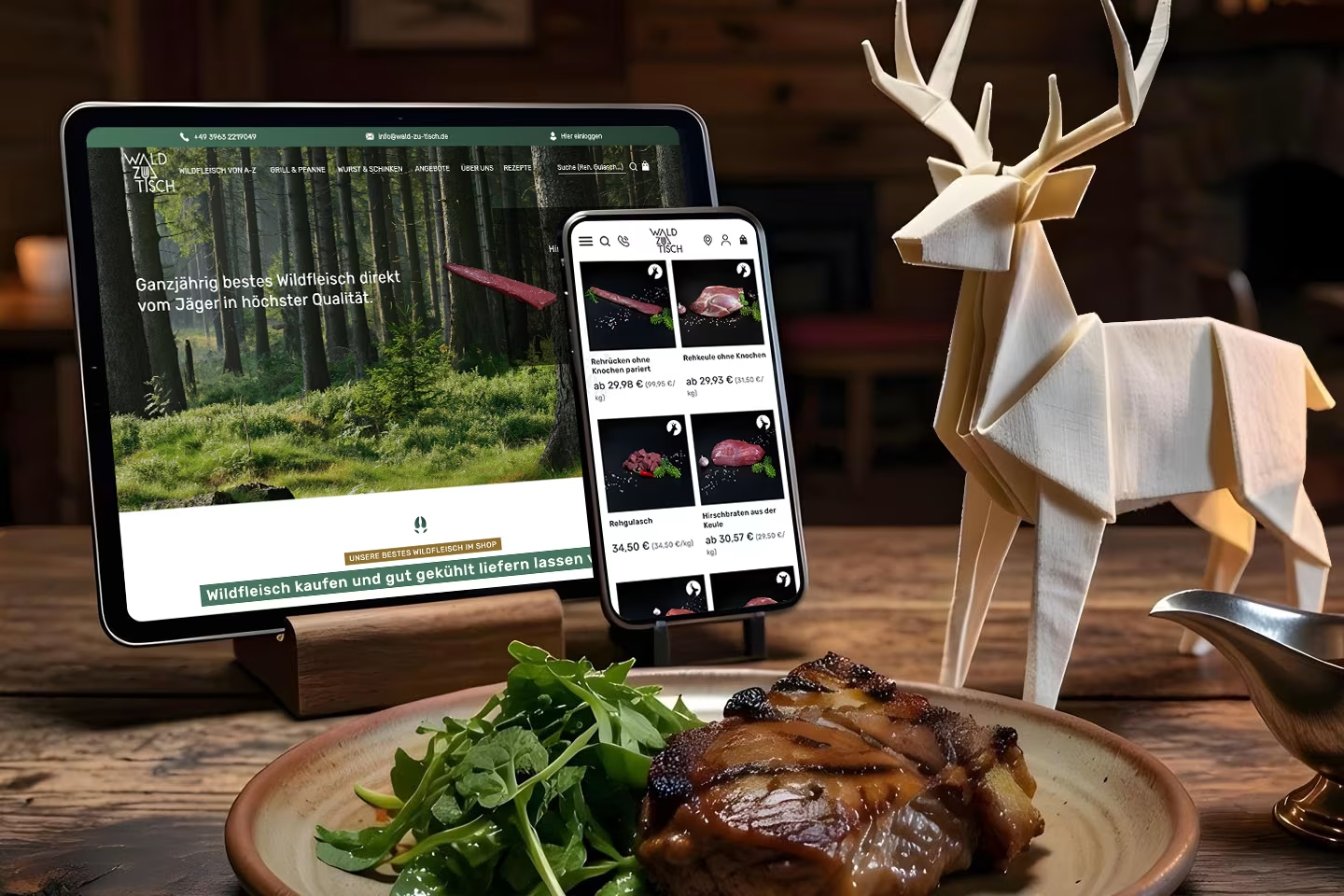
A good cut of game meat deserves a shop that makes you want to cook. One that explains which meat suits the meal you have planned. And one that supports you while browsing and ordering. For Forest to Table, the game-meat shop of Lenz Wild GmbH, we worked on exactly that: with a relaunch from PrestaShop to WooCommerce, a redesigned recipe section and many improvements below the surface.
This project continues a longer story. We have supported Forest to Table since 2021. We built the previous PrestaShop ourselves. Now we have transferred the data, products and shop content to the new system, evolved the design and resolved technical weaknesses. It was a major rebuild in which we retained what worked and fundamentally rethought other things.
Why we would make our earlier decision differently today
PrestaShop was a good choice for Forest to Table. About five years ago, the system already included many functions for online retail. It provided a sound basis for an independent shop that we could tailor to the brand and its products. Our project history with Forest to Table shows how much individual work had already gone into that first implementation.
We stand by that. A technical decision must fit the requirements of its time. But it does not oblige a shop to remain on the same platform forever.
In the meantime, Forest to Table needed to do more. The world of recipes required space for its own design and a closer connection to the range. At the same time, we wanted to improve loading speed, reduce barriers and prepare content so that search engines and AI systems could understand it well. On the existing installation, bringing these goals together was becoming increasingly laborious.
What can make work on a long-established PrestaShop difficult
When you develop a shop that has been tailored over many years, you are always working with its history too. One module affects the theme, a custom adjustment depends on a particular extension, and a small change suddenly requires a larger intervention. Forest to Table already had numerous individual adjustments from the first implementation. The effort often grows in places customers never see in the finished shop.
PrestaShop continues to evolve. Its developer documentation describes the architecture, in which older and modernised areas come together. For developers, this means having to familiarise themselves with different structures depending on the task. Together with the dependencies of a heavily customised shop, this can make maintenance and further development laborious. This accounts for some of the frustration many people know from such projects.
For the next stage of Forest to Table’s development, we therefore chose WooCommerce on WordPress. Here, shop and editorial content can be connected in the way we need for this project. But a shop only becomes fast through its implementation: through the interplay of code, images, extensions and server. Changing the system name alone would not have solved our tasks.
A complete shop migration, with work down to the finest detail
The visible part of a relaunch is the new website. In this project, a large part of the work lay beneath it. We transferred the data from PrestaShop into the new WooCommerce structure, migrated products and content, and built the presentation in the new system. Such data is interconnected. A product needs its information and images, a category needs a meaningful classification, and a recipe needs a route to the right offering.
At the same time, we revised the design and usability. Forest to Table was meant to remain recognisable as a brand. The rebuild also gave us the opportunity to eliminate many small weaknesses in the old design and make the pages calmer and easier to read. In a shop, the sum of such details matters: How quickly can I grasp an offering? Where do I find the next piece of information? Which step takes me forward?
- Migration from PrestaShop to WooCommerce, including the data, products and shop content
- Further development of the design and correction of many small display issues
- New recipe section with a direct connection to matching products
- Work on performance, accessibility and technical safeguards
- Better preparation for search engines and AI systems
- New 404 page and revised previews for shared links
Recipes: shopping often begins with an idea for a meal
Not every visitor is immediately looking for venison saddle. Some want to know how to cook game fillet on the grill. Others are planning a meal with friends and are looking for a recipe they feel confident trying. For a game-meat shop, these are valuable first contacts. Those who help with preparation can reach people who did not know the shop at all before.
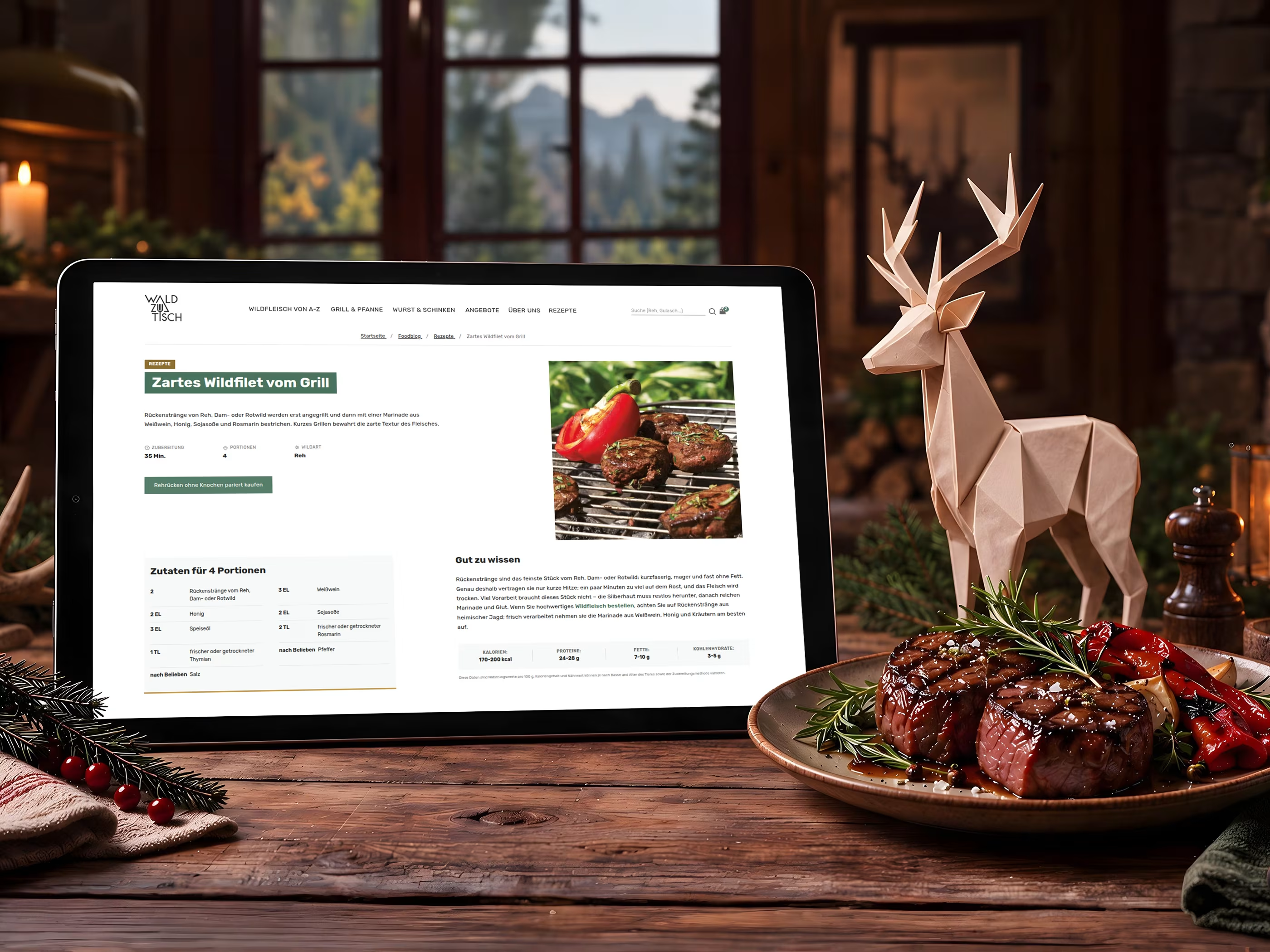
That is why the recipes received special attention during the relaunch. The new design gives the dish space. Ingredients, preparation and notes are clearly structured. In the recipe overview, users can filter by type of game. On the individual page, information about time and portions helps plan the meal. This is useful for someone cooking game for the first time as well as for experienced cooks who want to look something up quickly.
The recipe for tender grilled game fillet shows the structure: 35 minutes total time, ingredients for four portions and preparation in individual steps. There are also notes about the meat and suitable products. The recipe provides a direct link to venison saddle; further recommendations appear in the “Suitable for this recipe” section. The connection between the dish and the purchase is visible exactly where it genuinely helps.
The recipe also has a clear technical structure. The source code of this example contains Recipe data for ingredients, preparation steps, time and portions, among other things. Search engines can read this information. They decide themselves whether to use it for a special display in search results. Above all, the information has to be correct on the page and useful for readers.
For us, this is content work with a clear purpose: helping people cook and showing them the way to the right product. The goal is new visits and additional orders. How strongly the recipe section contributes can be assessed after the relaunch through its use. The design now creates better conditions for that.
What the tests show before and after the relaunch
With a project of this size, we wanted to make the changes visible technically as well. The following values come from the documented before-and-after reports for the relaunch in September 2026. The tools examine different sections of a website. That is why, alongside the results, we explain what can be inferred from them.
| Check | Before | After |
|---|---|---|
| PageSpeed: Performance | 65/100 | 92/100 |
| PageSpeed: Accessibility / Best Practices / SEO | 99 / 96 / 92 | 100 / 100 / 100 |
| Separate automated accessibility check | 42/100; 4 critical issues | 90/100; 0 critical issues |
| Security Headers | F | A+ |
| Seobility: overall on-page | 84 % | 90 % |
| Seobility: technical & meta / structure | 71 % / 89 % | 94 % / 95 % |
| Seobility: content | 93 % | 81 % |
| Cloudflare: Agent Readiness, partial scan | 43/100 | 86/100 |
More speed: PageSpeed rises from 65 to 92
Speed was a weakness of the previous shop and an important reason for the rebuild. In the documented PageSpeed test, the performance score rises from 65 to 92 points. This moves it from the orange to the green range. The other three categories improve too: accessibility from 99 to 100, best practices from 96 to 100 and SEO from 92 to 100.
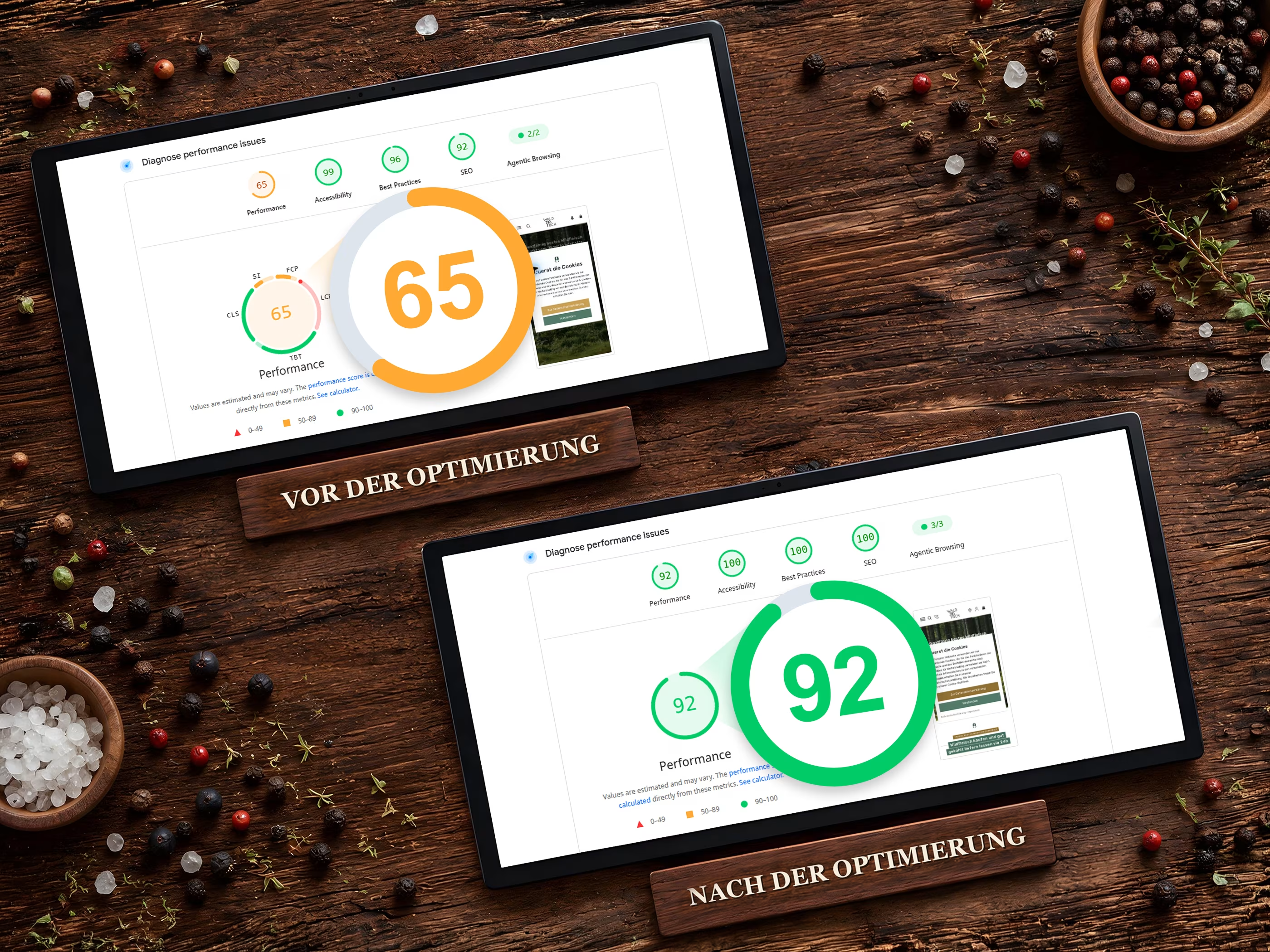
PageSpeed uses Lighthouse to assess, under defined test conditions, page build-up and responsiveness during loading, among other things. The performance score combines several metrics. For visitors, it is about something very ordinary: they want to see offers and use the page without waiting for it to build. With many product images, that deserves particular attention.
The improvement of 27 points demonstrates progress in this test. It does not mean that every page loads a fixed percentage faster under all conditions. Google also points to fluctuating test conditions in its Lighthouse scoring documentation. For further performance optimisation, real usage data and the shop’s different page types therefore remain relevant.
Reducing barriers: two tests, two different perspectives
When it comes to accessibility, it is worth taking a closer look. The PageSpeed check already rated the old page at 99 points. A separate automated test, by contrast, came to 42 out of 100 points and reported four critical issues. This is a good example of why a single green score does not describe an entire website.
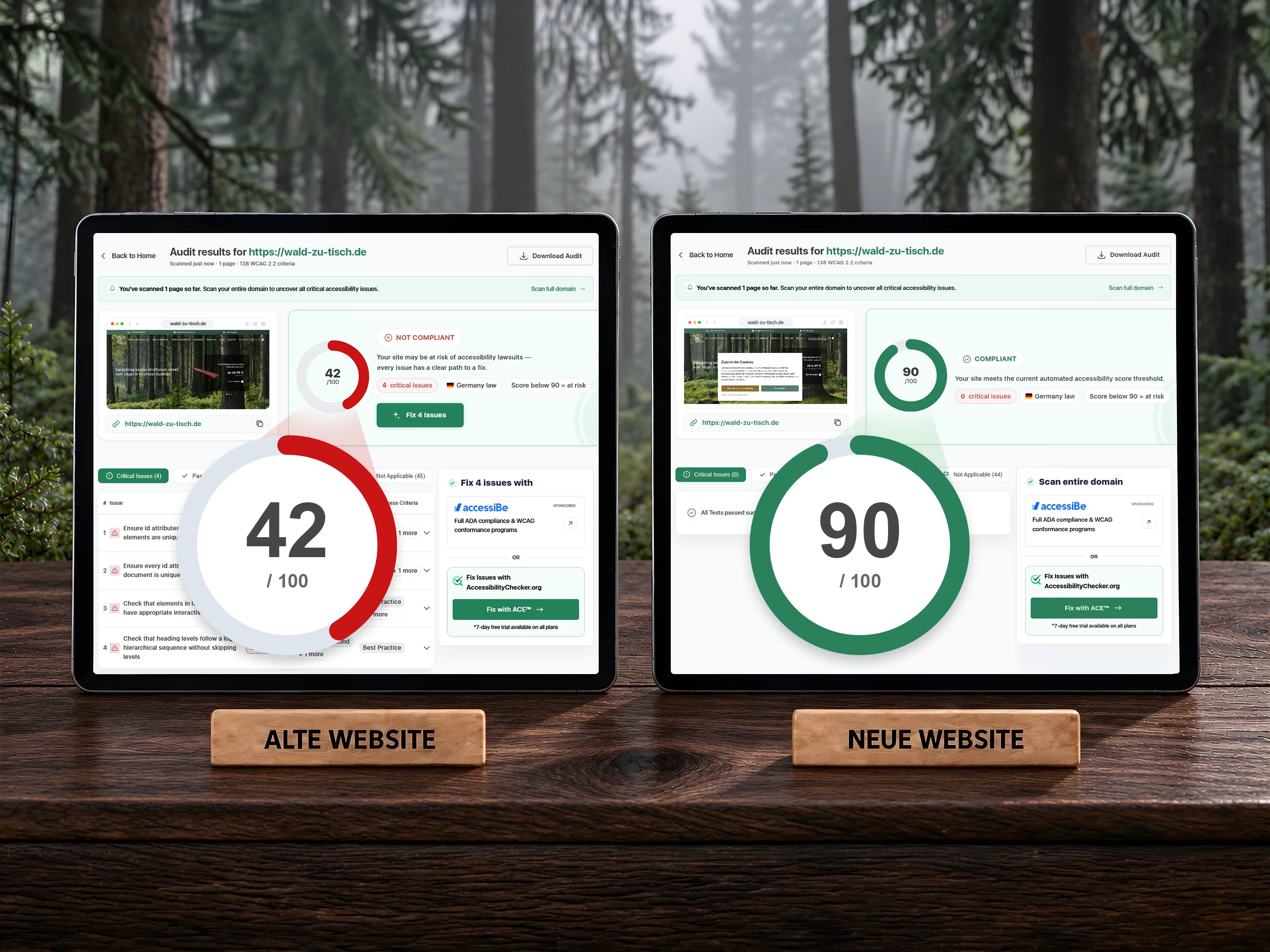
After the relaunch, this second test reaches 90 points and reports no critical issues. The before report includes notices about duplicate IDs, the marking of interactive elements and the heading hierarchy, among other things. Such technical details can influence how assistive technologies interpret a page and how easy it is to use.
In the rebuild, we resolved many problems in the previous implementation. However, the comparison shown tests one page automatically. It does not replace a manual review of the entire purchasing process, for example with a keyboard and screen reader. For us, this distinction is part of serious accessibility work: demonstrating improvements and openly stating the scope of the review.
Security Headers: from F to A+
The difference is especially clear in the Security Headers test. The rating rises from F to A+. It checks security directives that the server sends to the browser. For example, these help require encrypted connections or limit the embedding of content and the loading of certain resources.
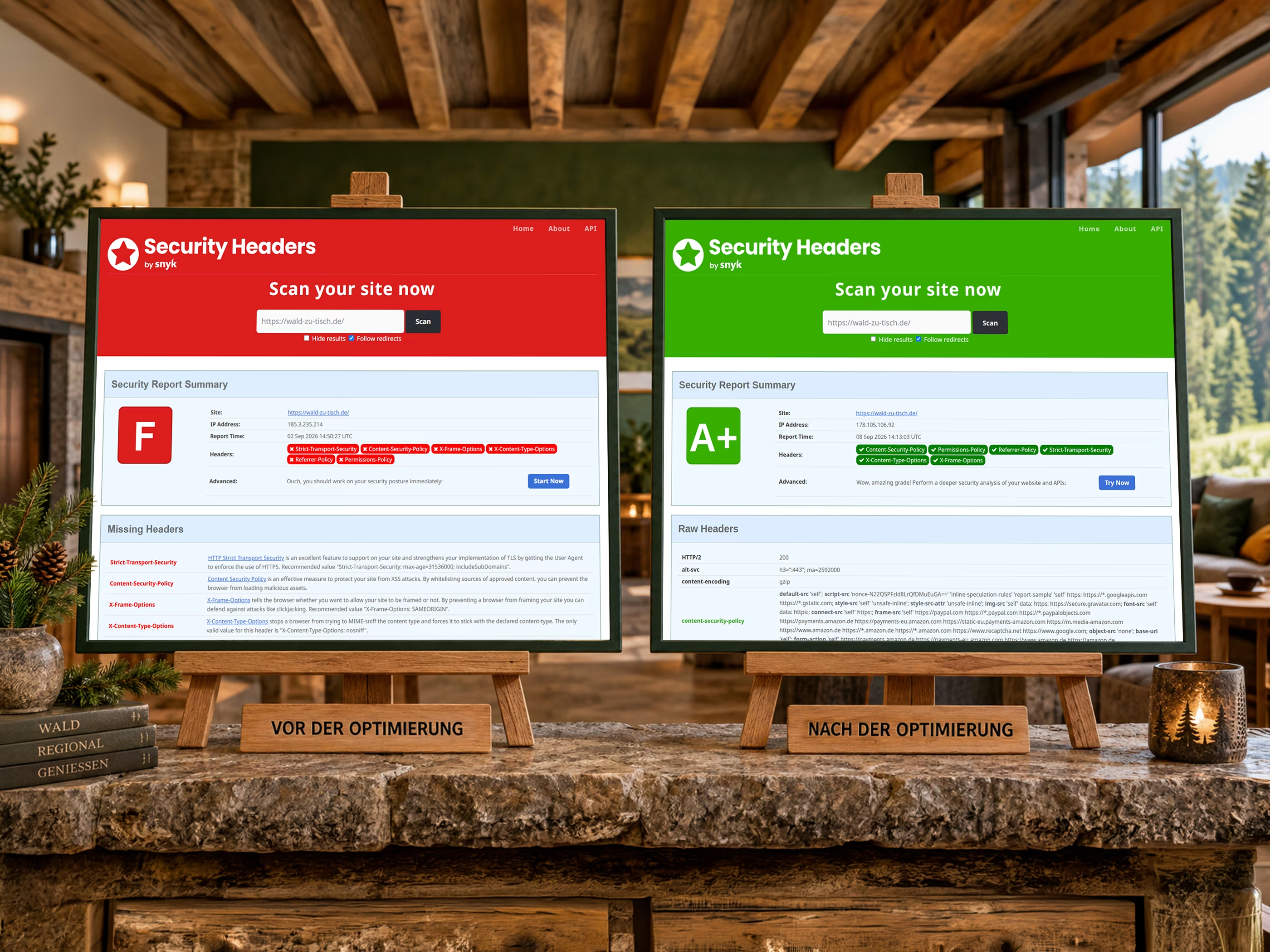
In the new report, all six listed headers are shown in green. They include Content-Security-Policy, Strict-Transport-Security and X-Content-Type-Options. The result shows that these safeguards are now set accordingly. A shop’s overall security also includes many other tasks, such as updates, access rights and the handling of extensions. A+ is a good finding for the headers tested, not a free pass for the entire shop.
Technical SEO: clear progress, with one open point
Seobility analyses a website from a search engine optimisation perspective and combines findings on technology, page structure and content. During the relaunch, the on-page score improves from 84 to 90 percent. The progress in technology and meta information is especially clear: from 71 to 94 percent. Structure rises from 89 to 95 percent.
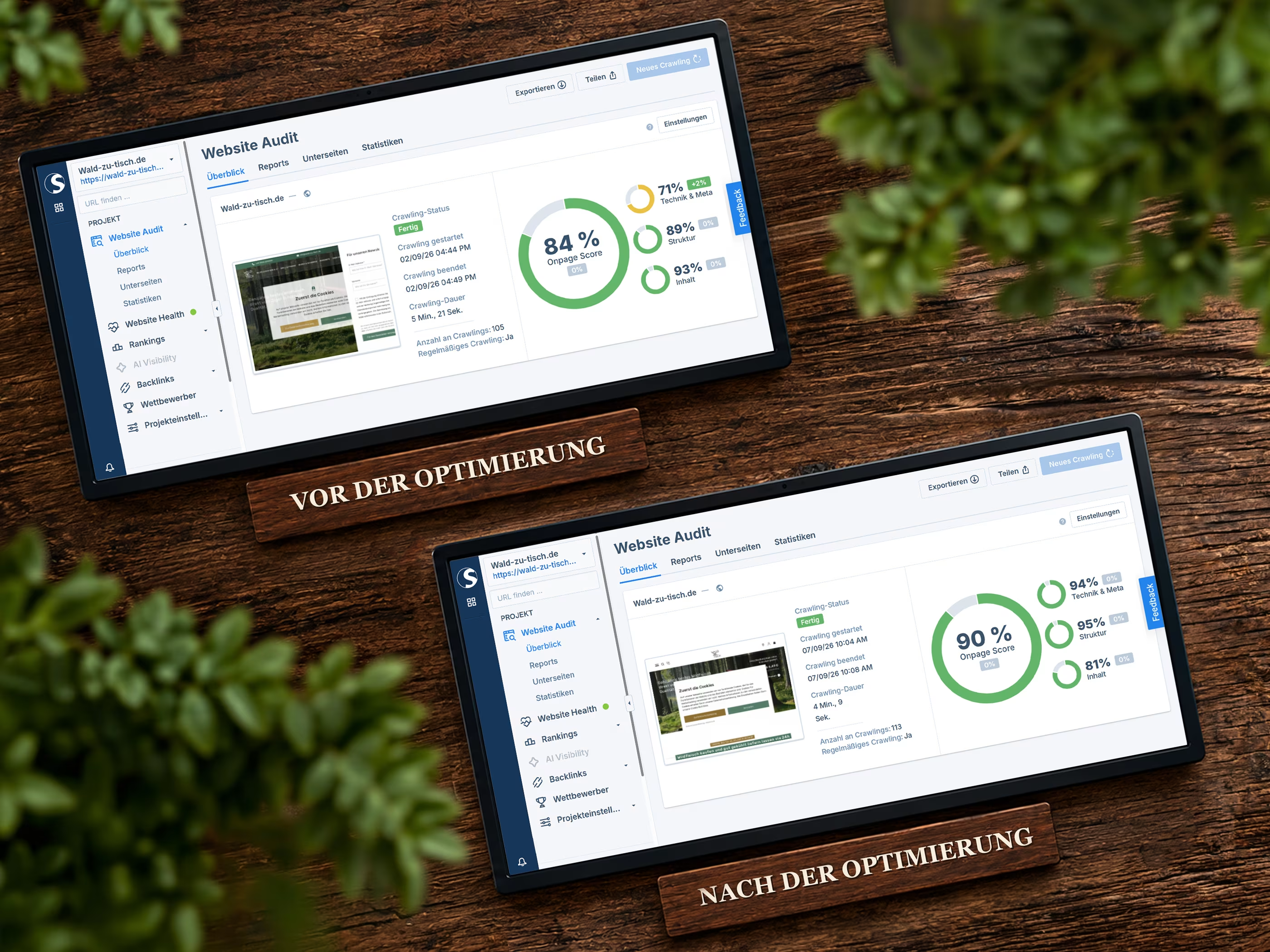
These test areas help identify technical obstacles and weaknesses in the organisation of pages. For a shop with products, categories and recipes, that is useful: good content must be accessible and sit within an understandable context. The tool provides specific test findings for this. It does not measure a Google ranking value.
The content score is also part of the full picture. It falls from 93 to 81 percent in the comparison. The reason cannot be determined from the overview alone. The individual findings and affected URLs need to be reviewed. We are taking this point forward as a task for further optimisation. A technical SEO audit is especially useful when it also shows where work remains.
More insights into our work
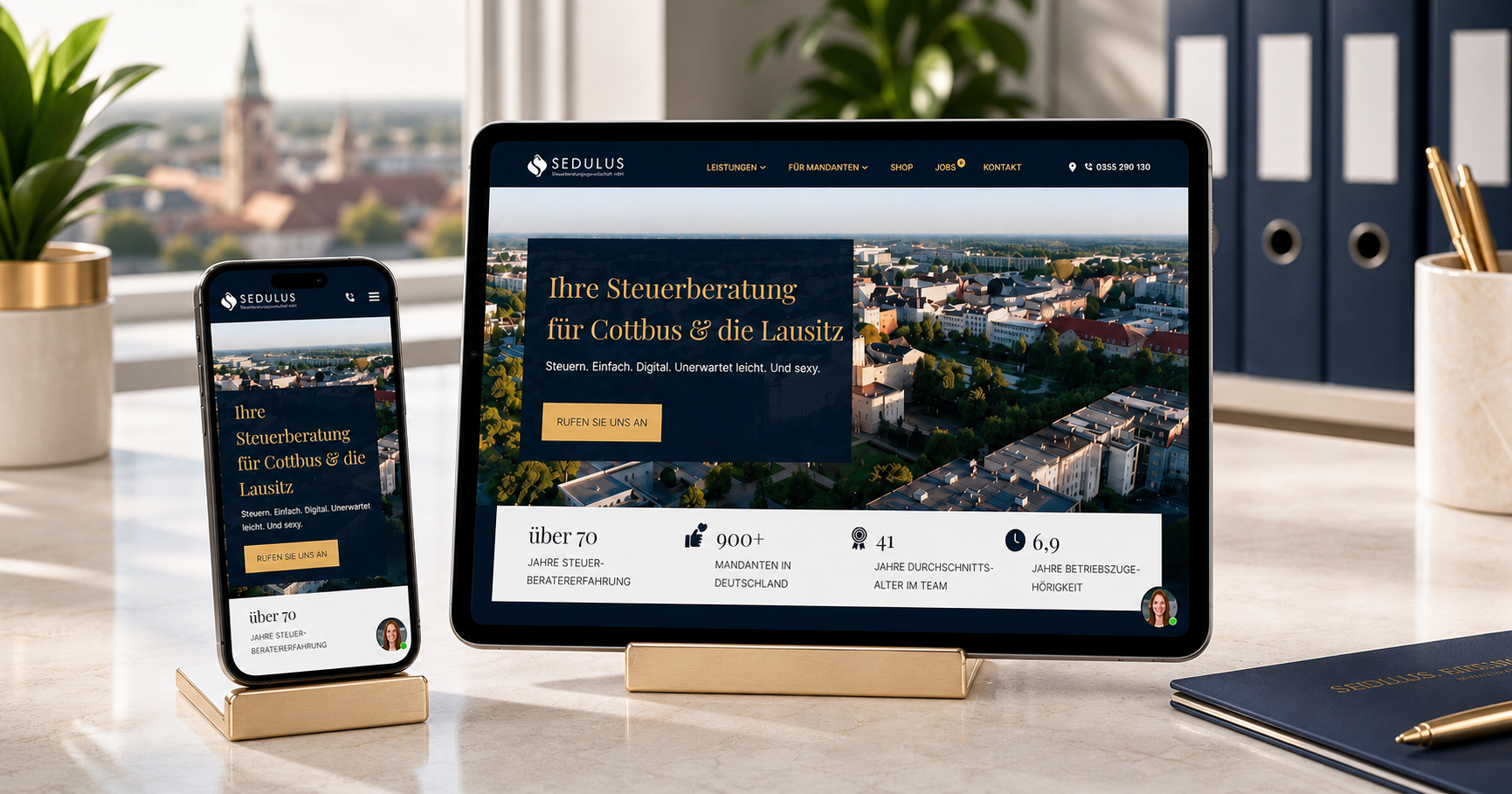
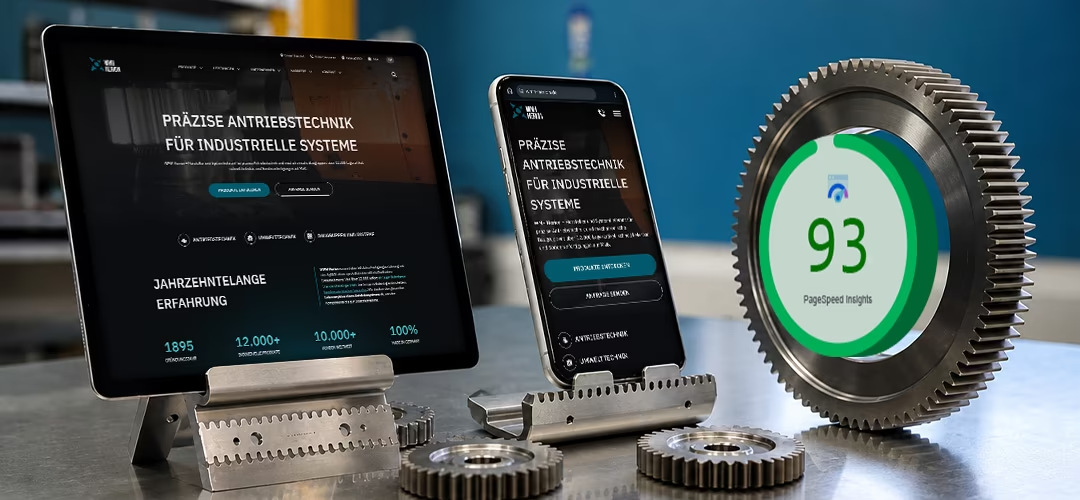
These projects and specialist articles also show how we develop websites and test technical quality.

Better prepared for AI search
Anyone developing a shop today must also consider new ways of product discovery. Alongside classic search results, there are AI answers in which users ask questions, compare recommendations and plan their next steps. An offering with products that need explanation and helpful recipes can have interesting points of contact there.
This does not mean saying goodbye to SEO. In its guide to optimisation for AI search experiences, Google explains that the proven foundations still apply: accessible pages, helpful content and a clear structure. A special file or a particular schema alone does not guarantee visibility in AI answers. Our optimisation for AI systems therefore starts with the content and its technical accessibility.
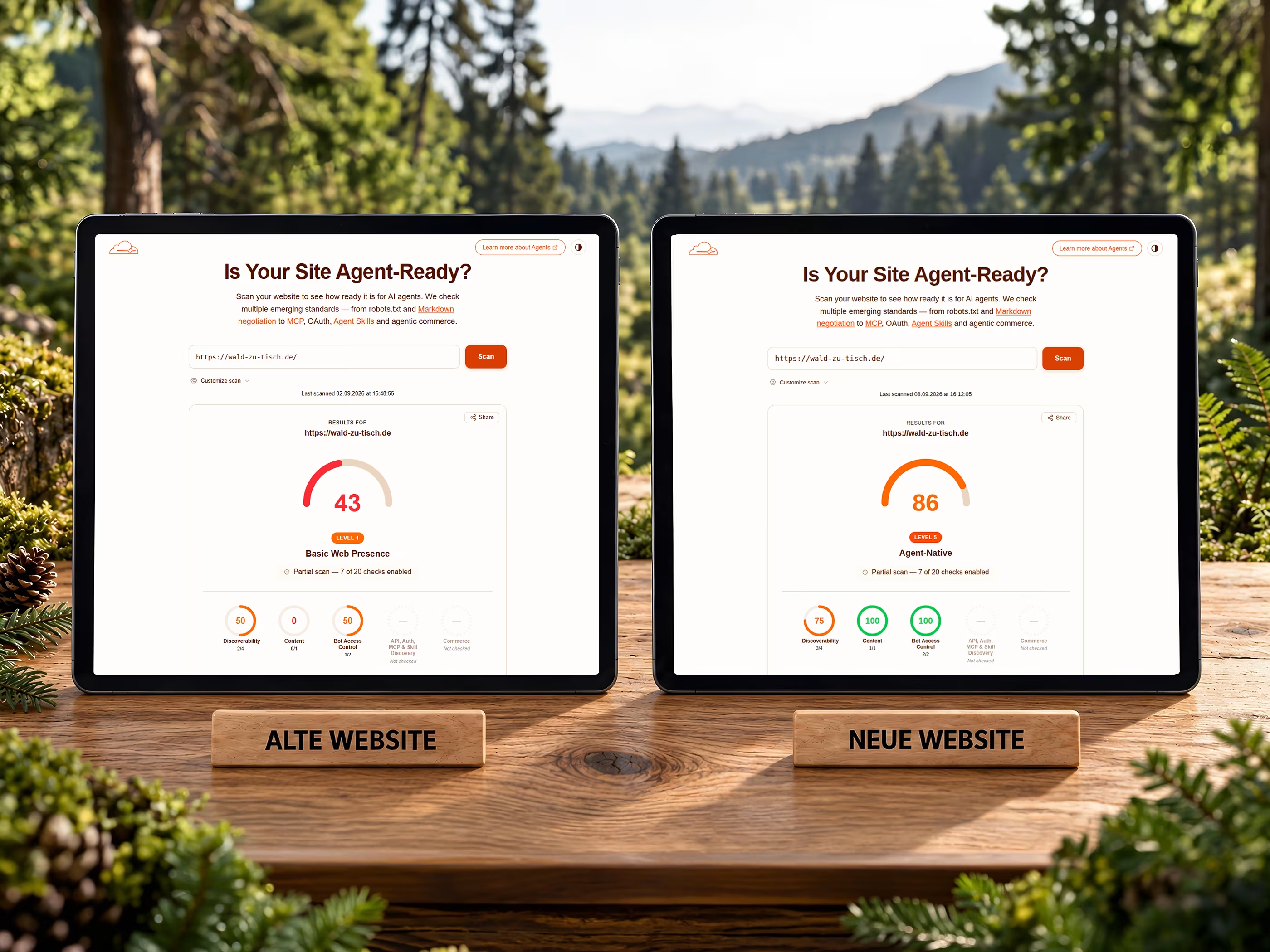
Cloudflare’s “Is Your Site Agent Ready?” test provides a complementary perspective. In the documented comparison, the score rises from 43 to 86 points. The assessed discoverability improves from 50 to 75, the content area from 0 to 100 and control of bot access from 50 to 100 percent.
Both reports are partial scans: they contain seven out of twenty checks. Areas such as commerce or API authentication were not tested. The higher score shows progress in the recorded technical prerequisites. It proves neither additional visitors from AI systems nor a particular position in their answers. We need later usage data for those conclusions. For us, the preparation still belongs in a modern relaunch, just like classic search engine optimisation.
A shared link is also part of the first impression
A recipe or a good offer is often shared. Before someone even opens the shop, they frequently see a link preview. That is why we also revised the Open Graph presentation during the relaunch. The comparison shows the previous preview with a note about image format and the new design with a suitable landscape format and a visible brand message.
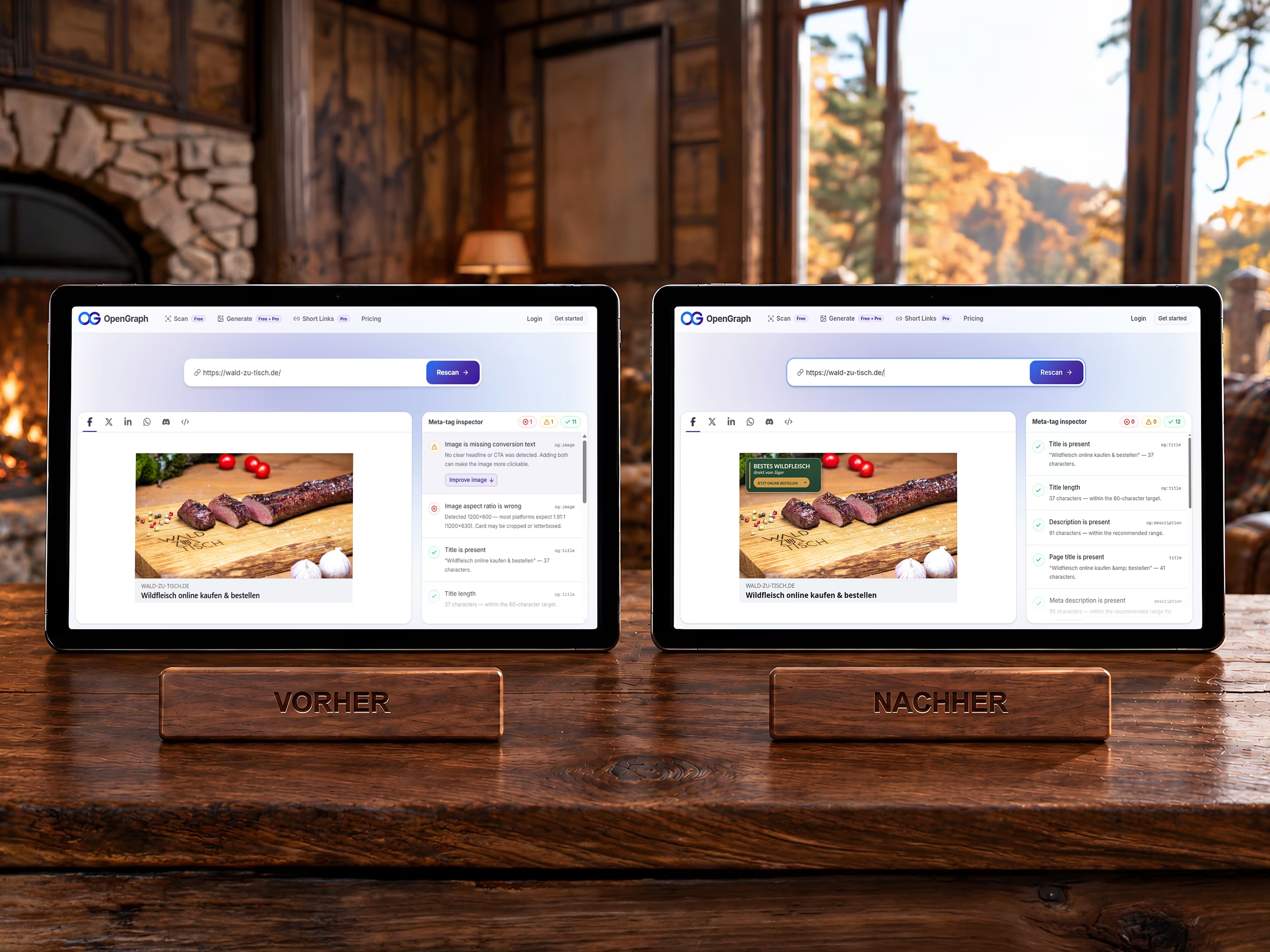
Open Graph data helps platforms put together the image, title and description for such previews. Each individual app decides how it displays the link. Well-prepared data gives it suitable material. It is a small piece of work on the shop that becomes visible outside the website itself.
The new 404 page: “This page has not been captured”
A page that cannot be found can fit the brand too. At Forest to Table, it now does so with the phrase “This page has not been captured”, fitting imagery and two sensible ways out: a search and the route back to the home page. This leaves visitors able to act when they arrive through an incorrect or outdated link.
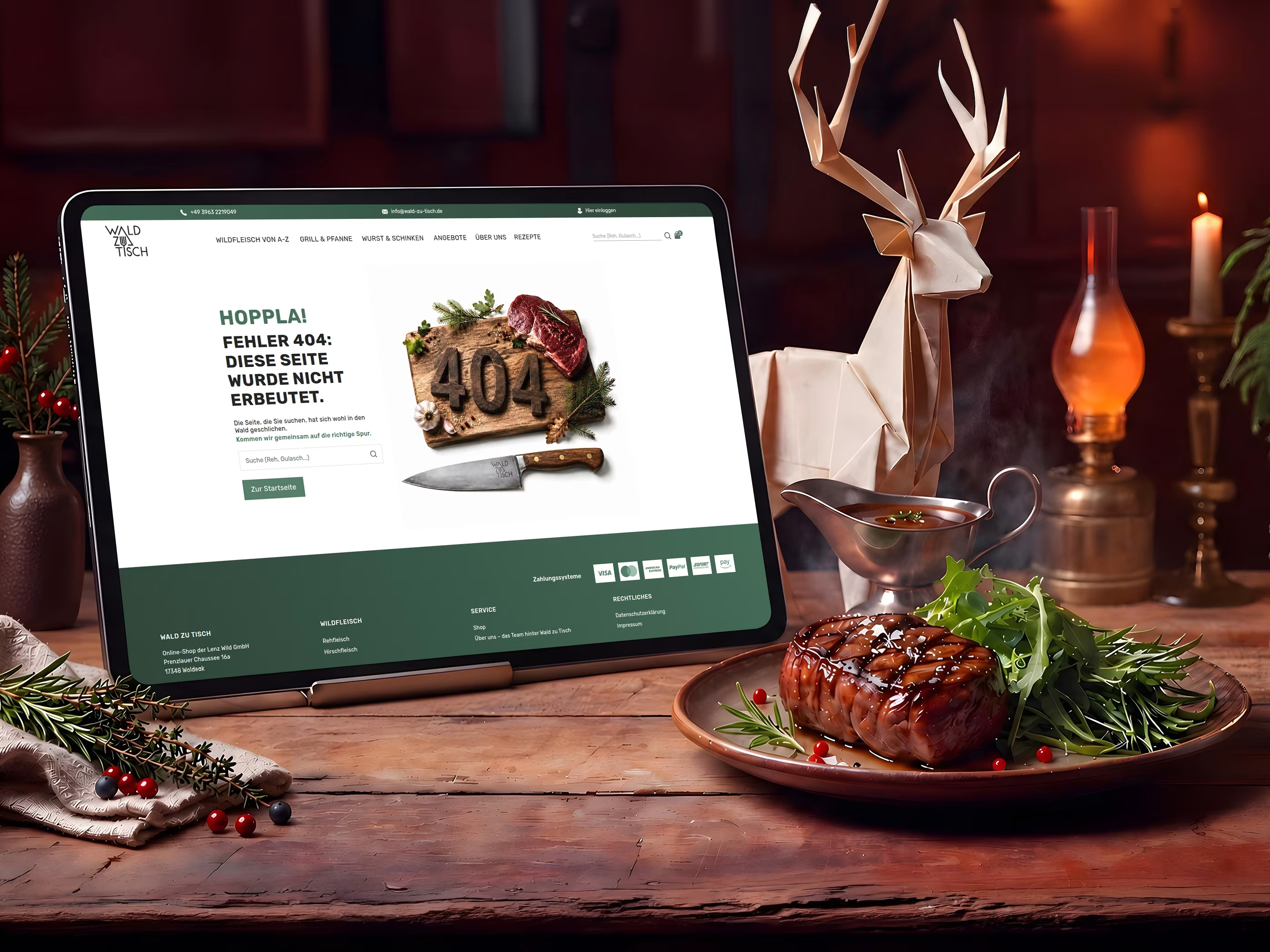
The idea may raise a smile. Its task remains practical. Anyone looking for a product or recipe should be able to make another attempt. Such an error page complements navigation; it does not replace the necessary redirects in a relaunch.
A new chapter for a shop we have supported for a long time
We are proud of this relaunch. It contains the work on an entire shop: transferring data, bringing products together again, improving the design, solving technical problems and rethinking the world of recipes. The comparison tests show how much has changed. The result is just as important for someone who simply wants to buy a good cut of game meat and cook something with it.
Forest to Table now has a new technical foundation and a recipe section that makes you want to stay longer. We have developed our previous work further and replaced it where today’s requirements made sense. This is exactly what we understand by a long-term partnership: achieving a good state and being ready to question it again later.
Questions about the Forest to Table shop relaunch
The existing shop needed to become faster and offer more options for design and for connecting products and recipes. There were also tasks around accessibility, security and preparation for search engines and AI systems. We chose WooCommerce on WordPress as the new foundation for these goals.
No. The system suited the requirements at the time and included many functions for online retail. We built the previous shop ourselves. The later change follows from today’s goals and the effort required to develop the long-established installation accordingly.
That cannot be said in general terms. Hosting, theme, extensions, data and technical implementation affect the speed of both systems. For Forest to Table, the documented PageSpeed performance score improves from 65 to 92 points after the relaunch.
We transferred the data, products and shop content to the new WooCommerce structure. At the same time, we revised the design and rebuilt the recipe section. The relaunch therefore included both the existing substance of the shop and its further development.
Recipes can reach people who are initially looking for a dish or help with preparation. Ingredients, clear steps and relevant product links connect this need for information with the range. At Forest to Table, for example, the recipe for game fillet leads directly to the suitable meat.
No. Every test has a limited scope. The automated accessibility check shown tests one page; Security Headers evaluates specific HTTP headers. The results demonstrate improvements in these areas. A more extensive review must also include other pages, user flows and security aspects.
In the Cloudflare partial scan, the score rises from 43 to 86 points. Both comparisons contain seven out of twenty checks. This shows improvements in the technical prerequisites tested. Whether AI systems mention the shop more often or bring additional visitors must be assessed using further data.
Is your shop ready for its next step too?
Perhaps your shop system still fits well, and a few targeted improvements are enough. Perhaps adjustments now cost so much effort that a rebuild makes sense. We will look at where your shop stands today and what it should be able to do in the future. Talk to us about your online shop.