Finding the Best Agency: What Really Matters (with a Checklist)

The best agency is not the most well-known or the most expensive, but the one that fits your project goals and delivers measurable results. What matters most are clear processes, transparent communication, and objectively verifiable quality criteria such as performance, security, on-page quality, accessibility, and structured data.
Many companies only compare prices or designs. The truly relevant differences, however, lie in project structure, quality assurance, and the ability to continuously develop results over the long term while fully meeting the client’s goals.
Why We’re Writing This Article
Not long ago, I came across another bold post on LinkedIn. A CEO essentially wrote that his agency was better than everyone else in the market. Maximum specialization, maximum focus, maximum superiority.
I read statements like this regularly. Almost every agency considers itself the best. That’s part of the normal agency DNA. And of course, it’s understandable. Anyone thinking entrepreneurially must be convinced of their own offering.
We too are convinced that 4eck Media is one of the best agencies for web design with WordPress and a clear SEO and GEO focus. Not because we claim it. But because we make quality measurable. The difference doesn’t lie in strong words. The difference lies in verifiable results.

That’s why we’re writing this article. Not to talk down others. But to show what genuine quality can be measured by, objectively.
Because in the end, it’s not the loudness of a claim that matters, but the impact on the client. Achieving goals is supported by clean architecture, strong performance, verified security, structured content, accessibility, and long-term scalability.
That’s exactly what you’ll find in the concrete checklist further below.
What Does “Best Agency” Actually Mean?
“Best agency” is not an objective term. There is no single best agency for everyone — only the best one for your specific project.
The choice depends primarily on three factors:
- Project type: Relaunch, new website, e-commerce shop, SEO/GEO, or complex platform
- Objectives: Leads, recruiting, revenue growth, brand positioning, or international scaling
- Project risk: How high is the damage in the event of delays, security vulnerabilities, or poor performance
An agency that excels in branding is not automatically the best choice for a technically demanding WordPress MultiSite system. Similarly, a strong e-commerce agency is not necessarily the right fit for a complex recruiting portal.
Best Agency for Whom?
The best agency for a regional SME is not automatically the best for an international e-commerce company or a public institution.
Complexity, budget, decision-making paths, and regulatory requirements differ considerably.
Best Agency for What?
Is the goal a relaunch, sustainable SEO scaling, recruiting, international expansion, or a complex online shop?
Each goal requires different competencies, processes, and priorities.
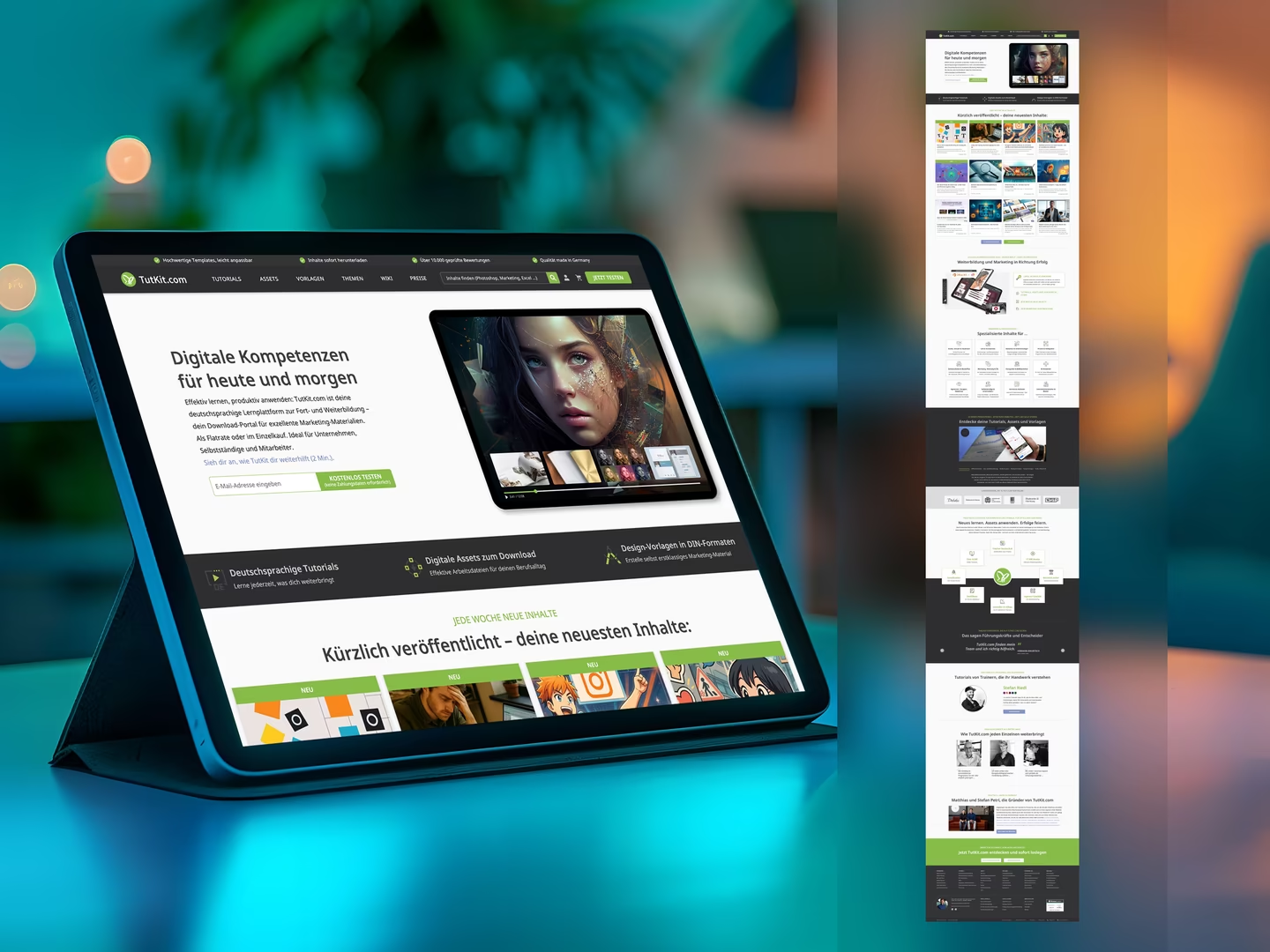
Can you entrust platform development to an agency that has otherwise only built one-pagers and small company websites? Take TutKit.com as an example — with over 28 languages and more than 500,000 subpages. A major project that can easily overwhelm an agency.
What Types of Agencies Are There and Which One Fits You?
Branding Agency
When does it make sense? When positioning, brand strategy, and visual identity are the focus.
How do you recognize quality?
- Strategic process documented
- Brand architecture is comprehensible
- Case studies showing impact, not just design images
Risk of the wrong choice:
Strong design, but a weak technical or SEO foundation. Two experiences from our practice on this:
- A client had their logo relaunched by a design agency. And right there, a typeface gets defined based on the designer’s personal taste. This is actually a current case of ours. The chosen typeface is a serif font that immediately reminds me of gravestone engravings. In our view, it doesn’t work in web design and pushes the client’s entire positioning in a very traditional direction — contrary to the intended message of innovation and modernity. The designer presented no mockups showing how the font works across different media (print design, website mockup, etc.).
- A major client of ours even had a custom typeface designed for their branding. Our task was multilingualism. There were no special characters available for the various countries, and no Cyrillic letters in the client’s style. These are the kinds of factors that need to be considered in branding.
A strong logo for a strong company. We at 4eck Media don’t position ourselves as a branding agency, but over the years we have designed many beautiful logos for our clients.
Specialized Web Design or WordPress Agency
When does it make sense?
For relaunches, technical optimization, performance focus, MultiSite, or complex structures.
How do you recognize quality?
- PageSpeed above 90 on mobile and desktop
- Clean code structure
- Technical SEO properly implemented
- Documented deploy processes
- Security standards verifiable
Risk:
Template-driven implementation without an understanding of architecture and long-term maintenance. Again, experiences from our agency practice:
- During PageSpeed optimization for an agricultural company from Bruchsal, we actually didn’t reach our own standard of 90+ for mobile PageSpeed — we only achieved 78. At least we were able to improve desktop speed from 64 to 98. The reason: the previous agency had assembled the website using a so-called premium template in a page builder.
- For a company from Dubai, we made the website accessible. Normally we calculate around 8 to 12 hours for classic corporate websites. In this case, we needed over 20 hours — roughly 100% more effort. The client was using the Divi page builder, which complicated everything in the optimization process.
Performance, SEA, or SEO Agency
When does it make sense?
When organic growth, lead generation, content strategy, or international scaling are the focus.
How do you recognize quality?
- Clear keyword, prompt, and topic strategy
- Structured content architecture
- Technical SEO audits
- Transparent KPIs
Risk:
Traffic without a conversion focus or without a technical foundation. One observation we’ve made is that SEO agencies manage client websites with a focus solely on content creation and ad campaigns. They may have some competence in auditing websites, but often lack the technical skills to actually fix the issues at the code level. You’ll be surprised how few specialized SEO agencies achieve top scores on their own on-page quality. You can simply run the test yourself using the SEO check by Seobility. Just enter the URL of a few agencies and see what score comes out. I held this mirror up to SEO agencies in my talk at SEO Day 2023. Starting at minute 17.
E-Commerce Agency
When does it make sense?
For complex shops, ERP integration, and performance marketing integration.
How do you recognize quality?
- Design follows UI/UX best practices for online shops
- Core Web Vitals in the shop area
- Clean product data structure
- Conversion optimization
- Scalable infrastructure
- Verifiable evidence of KPI development (traffic, revenue, average order value, …)
Risk:
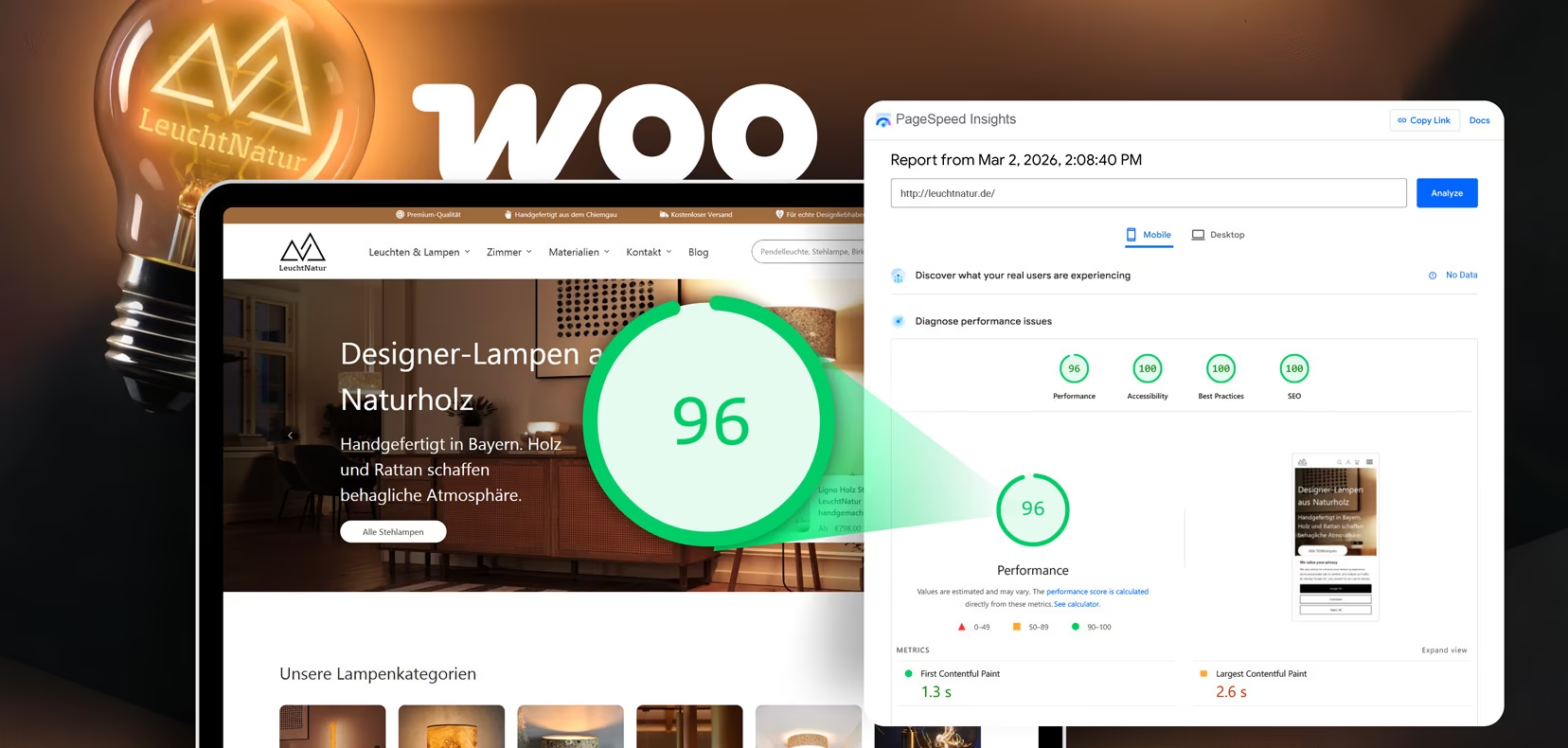
Focus only on design or ads, but a weak technical foundation. A current client project of ours, which is going live soon, is the migration of the shop system from Shopify to WooCommerce for a Bavarian lighting manufacturer. The client was limited by Shopify and had relatively high monthly costs due to the extensive use of additional apps. With WooCommerce, the client will soon have far greater possibilities in terms of technical foundation and in achieving SEO & GEO goals.
Full-Service Agency
When does it make sense?
When you want everything from a single source.
How do you recognize quality?
- Clear internal roles
- Specialists rather than generalists
- Transparent processes
- Verifiable technical standards
- Documented references and proven results for clients
Risk:
Generalism without real depth.
From our agency experience: We position ourselves as a tech agency for web design with WordPress, SEO/GEO, PageSpeed, accessibility, and multilingualism. Since we also handle print designs and more, it wouldn’t be wrong to say that our clients enjoy something close to full service. Because that’s often exactly what happens: the client reaches out about a website, and in the course of the work the logo gets refreshed, trade show materials get designed, and brochures get created. But since we only want to offer what we’re genuinely good at, we don’t do photo and video shoots for clients, and we leave social media management to competent social media agencies.
Our client ELBMED is a great example where it initially started as “just” a website, but over the years we were able to deliver a whole portfolio of competencies — from rebranding and print designs all the way to building a MultiSite system on WordPress for six websites.

What Questions Should You Always Ask an Agency?
The following questions help you choose an agency not based on personal taste or design preferences, but based on structure, professionalism, and measurability.
Who Is Operationally Responsible and Who Actually Works on My Project?
It’s not the sales rep or the pitch team that matters — it’s the implementation team. Ask to be clearly told:
- Who is the project manager? Are they also the client’s point of contact?
- Who handles development?
- Who is responsible for SEO?
- Who checks quality?
Make sure roles are clearly defined and that it’s not a case of “everyone does a bit of everything.”
What Does Your Process Look Like From Kickoff to Go-Live?
A professional agency can clearly explain its workflow, because the processes are standardized to increase efficiency and ensure client satisfaction and project success:
- Kickoff and goal definition
- Concept and architecture
- Design and feedback rounds
- Development with staging
- Testing and quality assurance
- Go-live with monitoring
Vague statements about processes are a warning sign.
What Standards Do You Use for Performance, Security, and Accessibility?
This is where marketing gets separated from technical substance — the wheat from the chaff. Specific follow-up questions:
- What target values are aimed for regarding Core Web Vitals?
- Which security standards are implemented?
- Is development guided by WCAG?
- Are there automated tests?
If the answers remain vague, push for more. If terms like Core Web Vitals or WCAG aren’t genuinely familiar to them, that’s a red flag.
Website speed, security, and accessibility can’t be optimized by gut feeling alone. The consistent use of testing tools determines project success and should be part of quality assurance for your project too.
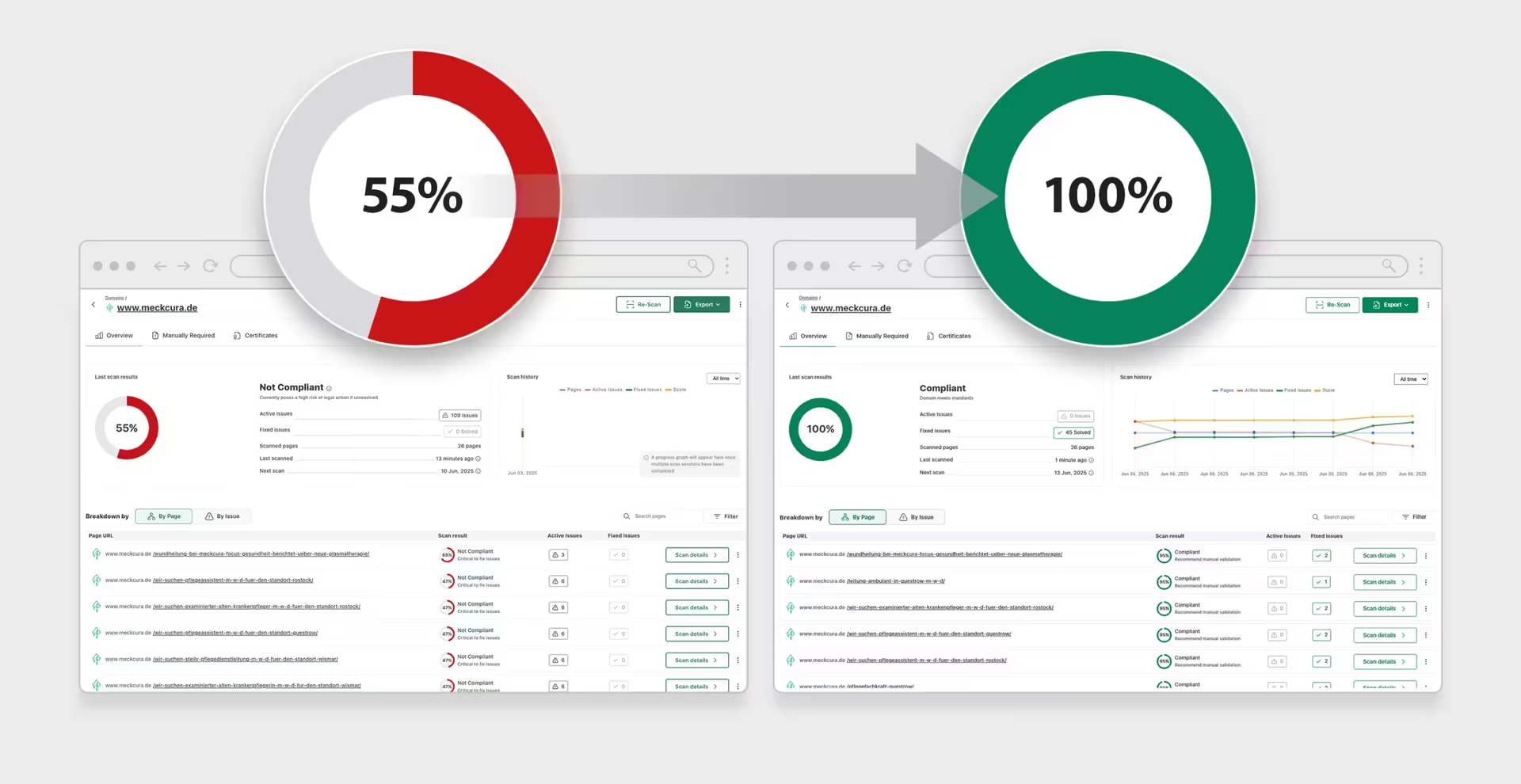
How Do You Define Success and What KPIs Do We Agree On?
Without measurable goals, there is no objective evaluation. Examples:
- PageSpeed values
- Visibility development
- Conversion goals
- Technical on-page score
- Load times in the shop
- Accessibility check results
Professional agencies define success before the project starts. At 4eck Media, we define the achievement of specific testing tool benchmarks as acceptance criteria in the agency contract.
This is how we guarantee, for example, that the website will achieve 90+ in mobile PageSpeed once it goes live.
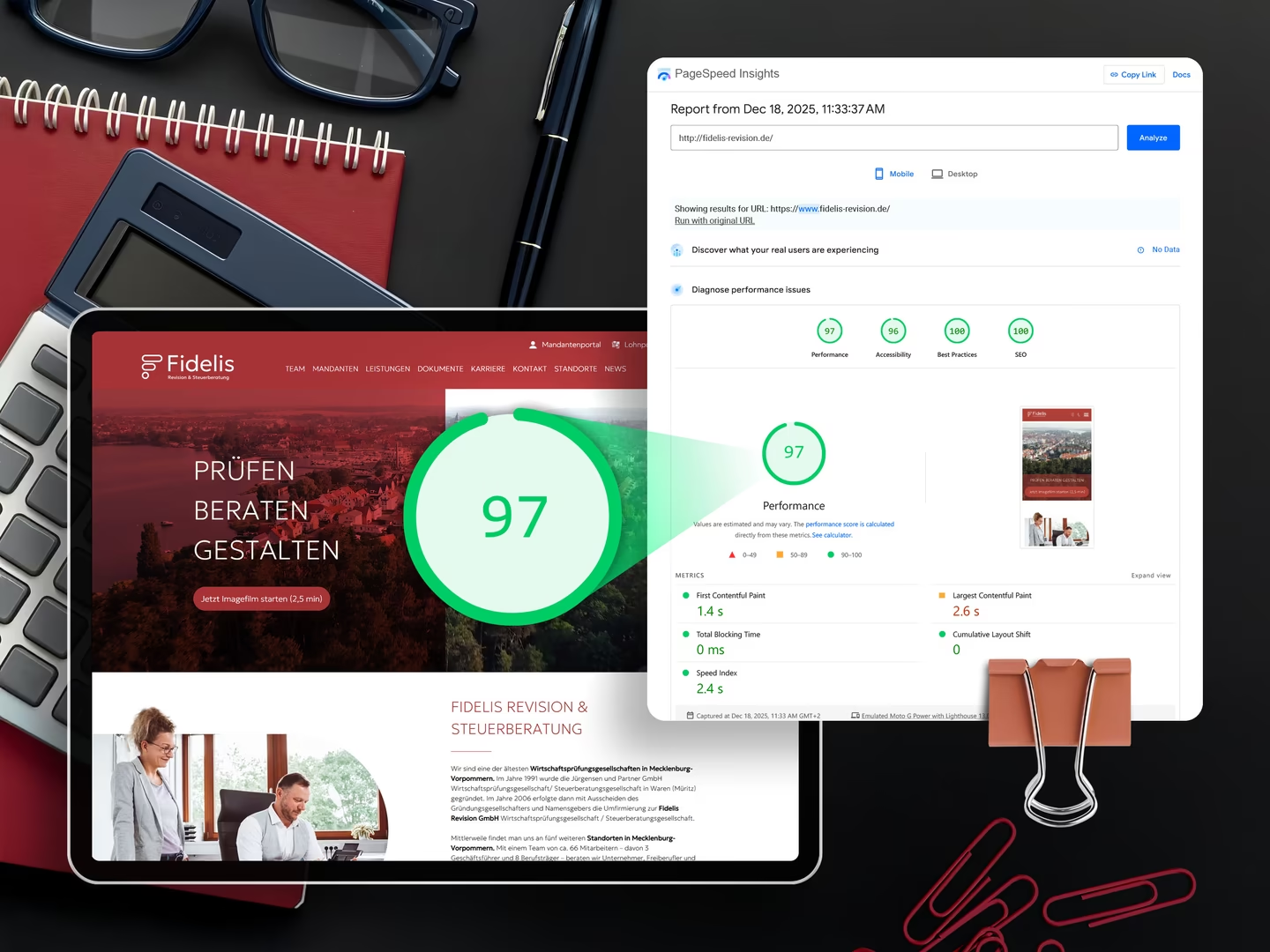
By the way, it’s a red flag when you see PageSpeed reports in agency posts that show the desktop result instead of the mobile result. Desktop speed is almost always at 95+ without much effort — unless the agency has made some serious blunders. The real differentiator is mobile PageSpeed, which is what truly matters (keyword: mobile first!).
How Are Maintenance, Monitoring, and Further Development Handled After Launch?
A website doesn’t end with the go-live. Questions to ask:
- Are there maintenance contracts? What ongoing costs arise from the use of apps (e.g., with Shopify) or plugins in WordPress?
- How quickly are security updates applied?
- Is there monitoring for performance and uptime?
- Who is the point of contact in an emergency?
Without a clear answer, long-term risk builds up. A fellow agency owner recently told me that a client whose website he manages pays over €2,000 per year in plugin costs for their WordPress system, because the implementing agency passed all license costs on to the client. That surprised me on two levels. With the number of WordPress projects we handle, we typically hold unlimited licenses for certain plugins and can grant clients usage of those licenses at no extra cost. Apparently, the website runs with an incredible 47 plugins — which is another massive red flag for the agency responsible. Good WordPress agencies try to keep the website as lean as possible.
How Is the Handover Documented?
At the end of the project, you should not be dependent on the agency.
Points to clarify:
- Is there a repository?
- Are all access credentials fully handed over?
- Is there technical documentation?
- Are rights and licenses clearly regulated?
Transparency is a quality indicator. We’re also fans of hosting client websites with major providers such as Hetzner. In that case, the client is the direct contractual partner — not us. We simply set everything up perfectly for the client. Some agencies offer to take over web hosting directly for their clients. This puts companies in a dependency that can become problematic over time if, for whatever reason, things aren’t all sunshine anymore.
How Do You Ensure Quality Assurance?
Is there:
- Code reviews?
- A staging environment?
- Pre-launch checklists for on-page quality, GEO, schema markup, accessibility, security, PageSpeed, OpenGraph, …?
- Performance tests before publication that cover not just the homepage, but every page type?
“We’ll test it” is not a professional answer.
Which References Are Technically Comparable to My Project?
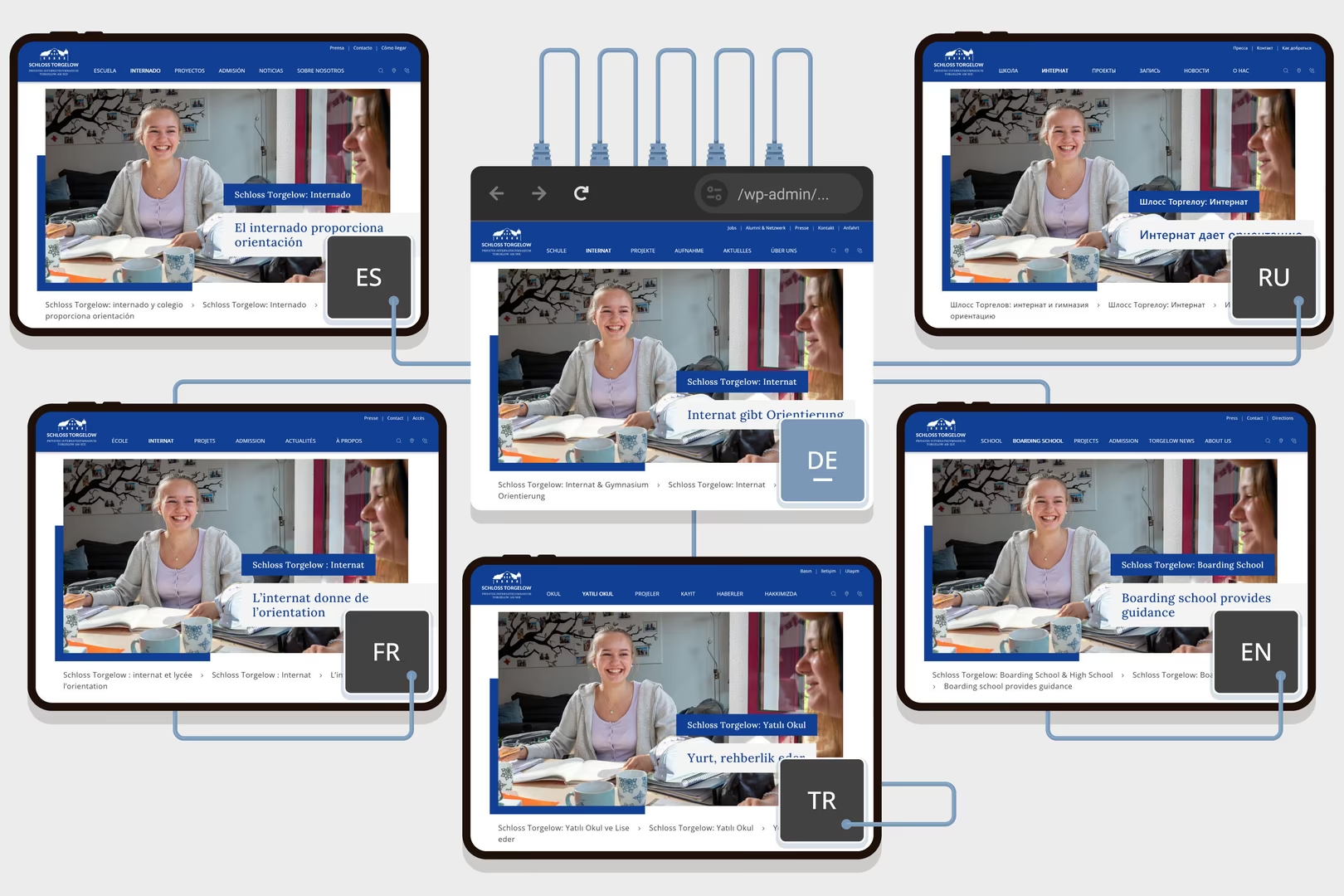
Design references are fine. But you need references with similar complexity. A one-pager is not comparable to a multilingual MultiSite system or a scaling e-commerce shop.
If you want to have a multilingual website built, check the agency’s references. If comparable projects exist, you can be confident that there will be few surprises for either side, because the challenges are known and solutions have already been implemented in previous projects.
How Do You Handle Change Requests and Scope Adjustments?
Transparent agencies work with:
- Change request processes
- Clear prioritizations
- Documented milestones
Unclear scope rules almost always lead to budget conflicts.
What Happens If Key People Are Unavailable?
This question is rarely asked, but it’s relevant. A designer can be replaced fairly quickly. A backend developer who is capable of writing custom import scripts for a migration from Typo3 to WordPress is a completely different story.
- Is there a substitute?
- Is knowledge documented?
- Can someone else take over?
Failsafe capacity is professionalism.
Checklist: How to Recognize a Truly Good Agency
An agency will always tell you why it’s great. This checklist helps you verify whether it can actually back that up. What matters is not self-image. Not the loudness of the marketing. But the technical, structural, and strategic substance.
| Criterion | How you recognize quality in agencies | Concrete proof | Red Flag |
|---|---|---|---|
| Strategic clarity | Goals, target audiences, and KPIs are defined before project start | Documented briefing, goal definition, KPI list | “We’ll sort that out later” |
| Project process | Clear phases from kickoff to go-live | Visualized process overview, roadmap, milestones | Unclear workflows, no timeline |
| Team & roles | Clear responsibilities, no generalist structure | Named core team with role descriptions | “We work on everything as a team” without specific names |
| Performance | Core Web Vitals compliance is guaranteed | Target values for LCP, INP, CLS; performance budget | “That depends on the server” |
| PageSpeed | Mobile scores above 90 and desktop scores above 95 are guaranteed | Before/after examples, real project values | Agency’s own website or latest reference below 70 points on mobile |
| Technical SEO | Clean information architecture and indexability, robots.txt, sitemap.xml, … | Technical audit verifiable in projects | Pretty website without technical optimization (often with page builders) |
| On-page quality | Technical, structural, and content quality, including clean semantics | On-page audit by crawlers like Seobility verifiable | “We optimize for search engines right away” … but without proof |
| Accessibility | WCAG-guided development at code level | Accessibility check report, compliance review | No knowledge of WCAG or “We’ll install a plugin” |
| Security | Security audit is part of the development process | Security headers, security audit score, update strategy, backup plan | SecurityHeaders score D–F, no CMS-side or server-side backup |
| Quality assurance | Testing before go-live | Staging system, checklists, test protocols | Live testing on the production system |
| Documentation | Handover is structured and complete | Repo, access credentials, license overview | No access to code or hosting |
| Maintenance & monitoring | Ongoing support after launch | Maintenance contract, monitoring tool, uptime monitoring | “Get in touch if something comes up” |
| Scalability | Architecture allows for further development | Modular structure, documented deploy processes | Template overload without structure |
| Cost transparency | Clear scope definition | Service description with clear boundaries | Flat rate without transparency or detail |
| Comparable references | Projects of similar size, industry, or technical complexity | Case studies with concrete results (performance, SEO, conversion, scaling) | Design gallery only without results, or entirely different project types |
10 Red Flags When Choosing an Agency
Not every agency that presents itself professionally also works in a structured and sustainable way. Certain warning signs, however, come up again and again.
If you recognize several of the following points, you should critically examine whether to work with that agency.
- No clear KPIs
If success is not defined in measurable terms, there will be no objective evaluation of the work later on. - Focus only on design
A beautiful website without performance, SEO structure, and technical quality delivers little value in the long run. - Page builder overkill
An excessive number of plugins or complex page builder setups can massively hinder performance, maintainability, and accessibility. - Agency’s own website is technically weak
Agencies whose own website has poor PageSpeed, SEO, or security scores should at least be questioned critically. - No clear development process
If an agency can’t explain how a project is structured from kickoff to go-live, there’s usually no clear internal methodology either. - Kununu ratings below 4.0
An agency that doesn’t treat its own employees well will rarely fully compensate for that with outstanding client service. Of course, no review platform is perfect. But recurring criticism about culture, leadership, communication, or overload can be a serious signal worth taking seriously. - Unclear ownership rights
If code, hosting, or access credentials are not handed over transparently, long-term dependency can develop. - SEO is only superficially understood
If SEO consists only of meta titles and keywords, the technical and structural competence is usually lacking. - Unrealistic promises or outdated proof
Statements like “We’ll guarantee you a top 1 ranking on Google” are not serious. Equally critical are visibility charts, case studies, or success examples that are two or more years old. AI systems, Google core updates, and changing search behavior have significantly shifted the rules of the game. What matters is what an agency can deliver today — not what it achieved years ago. - No maintenance strategy
A website is a system that needs to be maintained. If there’s no plan for updates, backups, and monitoring, technical risk builds up over time.
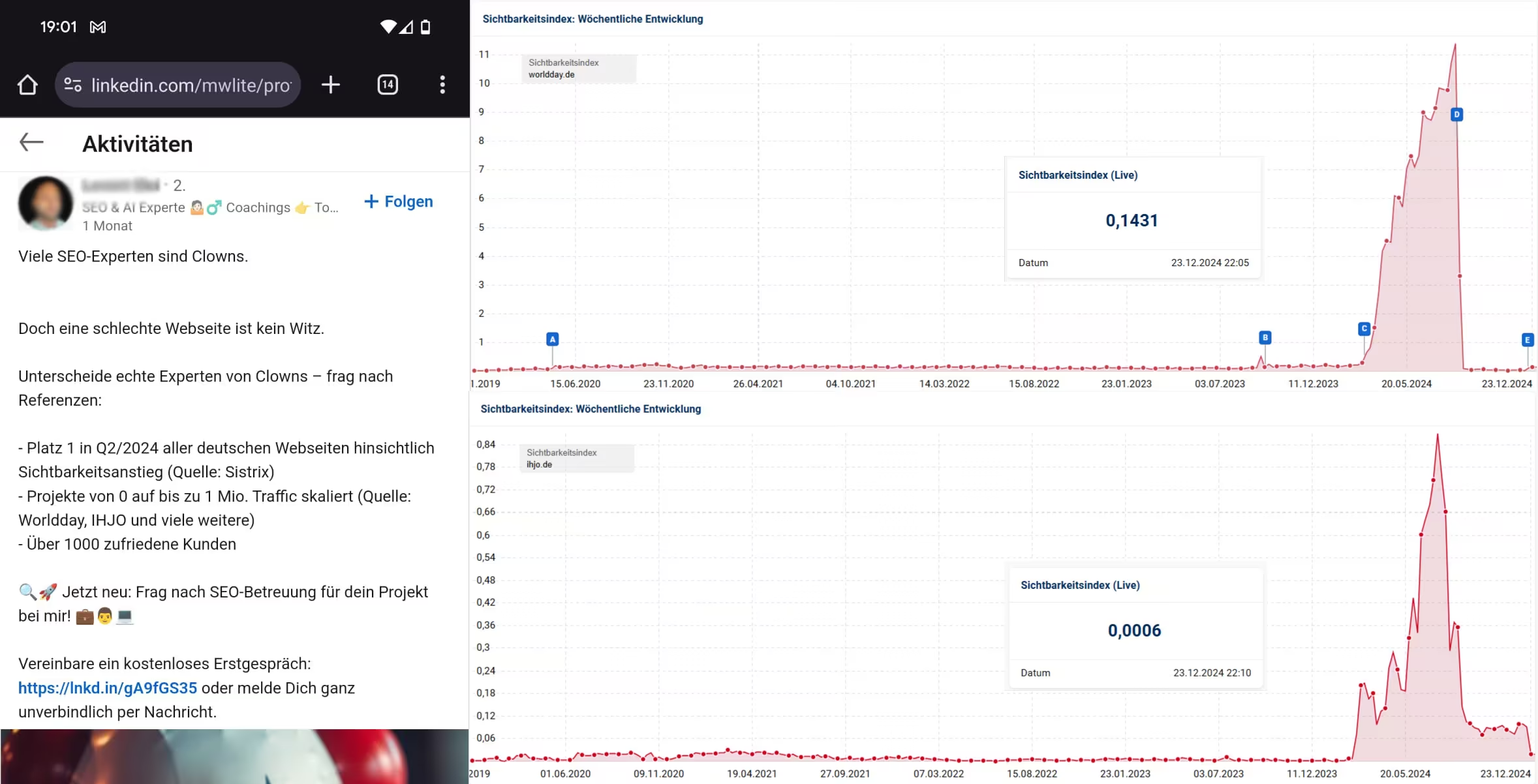
Back in 2024, I noticed a self-proclaimed SEO expert on LinkedIn presenting proof of their outstanding strategy — framed in an incredibly likeable way. A quick check reveals that this success was not sustainable. The website from the first chart currently has a Sistrix visibility score of 0.01, and the second site never recovered either.
Which Testing Tools You Can Use Yourself
You don’t need to be a developer or SEO expert to check basic quality indicators of a website. A few tools give you a solid first impression within just a few minutes.
- PageSpeed Insights: Here you can see the Core Web Vitals and the performance of a website on mobile devices and desktop.
- Seobility SEO Check: The SEO check shows on-page structure, technical errors, issues with internal linking, and mistakes in SEO/meta and more.
- Security Headers Test: Here you can check whether a website has implemented basic security mechanisms. If an agency implements security headers, it usually has further security standards built into its processes.
- AccessibilityChecker: This tool helps identify whether a website meets basic accessibility requirements.
The goal of these tests is not to conduct a full technical analysis, but to get a first sense of the quality of the implementation.
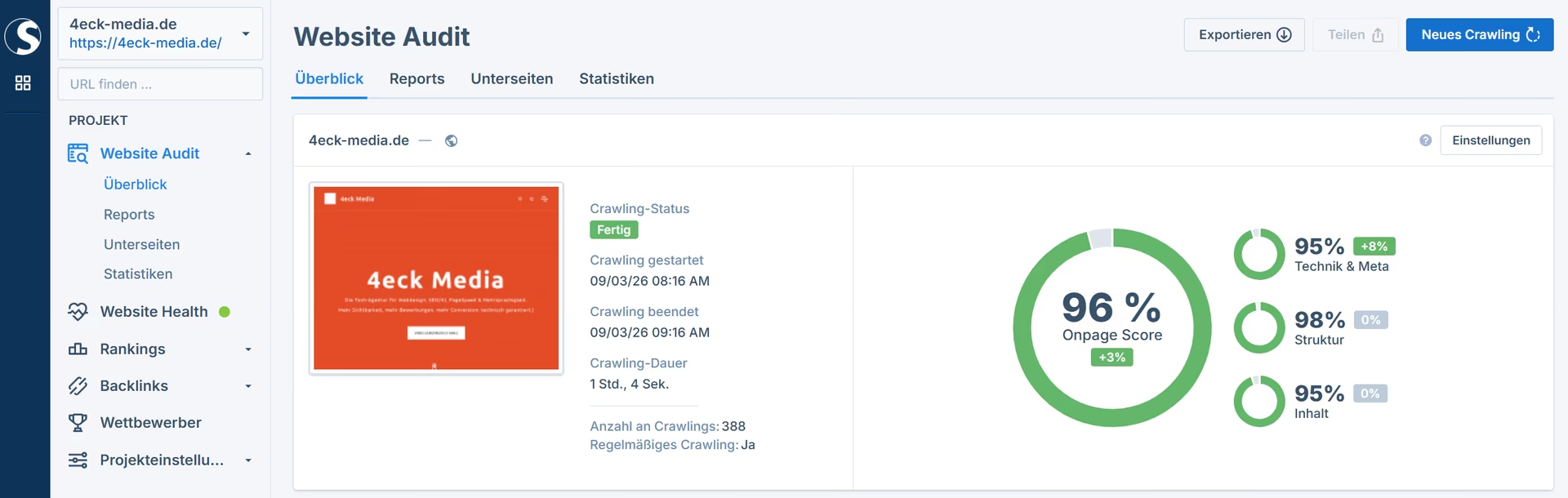
Across 502 analyzed pages, our own agency website currently shows an on-page score of 96 percent.
How to Evaluate an Agency in Less Than 10 Minutes
With just a few steps, you can get a first assessment of an agency’s quality.
1. Check the Agency’s Own Website
- Run a PageSpeed test
- Run an SEO check
- Check security headers
If fundamental problems are already visible here, take a closer look.
2. Look at Their References
Are the projects technically and strategically comparable to your own project?
Or are they just visual design examples without recognizable results?
Are the results still current, or do charts and traffic visualizations refer to a time period older than two years?
3. Check Content and Expertise
Has the agency published technical articles, case studies, or talks? Is there a YouTube channel with explanations and expert knowledge?
Or does the content mainly consist of marketing copy? And if content is available, does it show real expertise and hands-on experience — or is it pure AI-generated content?
4. Analyze Their Specialization
Does the agency have a clear competency profile, or does it offer everything?
Specialization is often a sign of deeper expertise.
5. Ask a Concrete Technical Question
For example:
- How do you ensure PageSpeed?
- How do you implement structured data?
- How do you test accessibility?
The quality of the answer usually says more than any presentation.
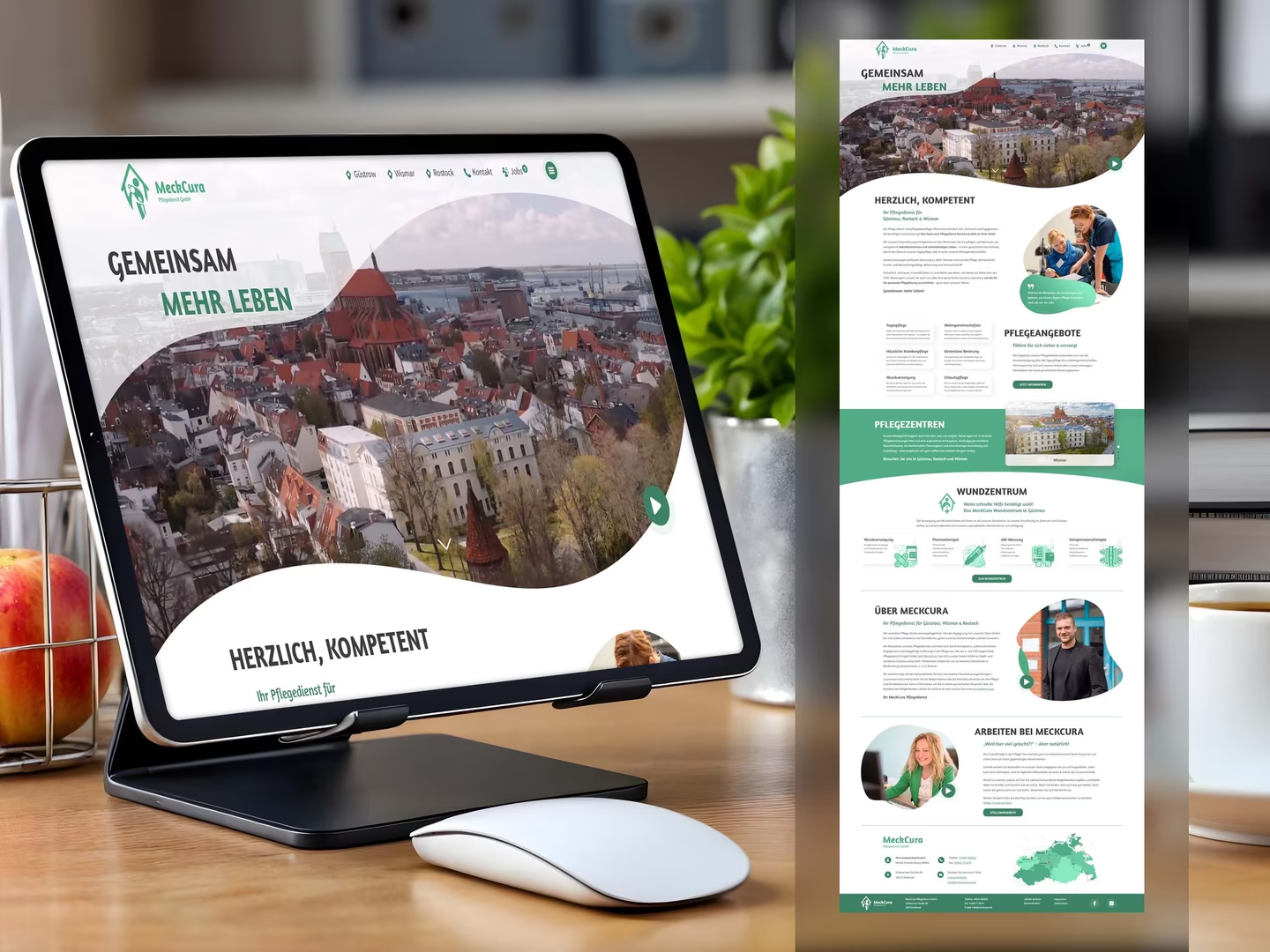
If you’re planning to have a care website built, check the agency’s references to see whether they’re familiar with your industry and can deliver exactly what matters to you. References help you understand how the agency implements content and functionality for your sector to achieve your goals — more inquiries, more applications, and ultimately more revenue.
Conclusion: You Recognize the Best Agency Not by Words, But by Results
Many agencies claim to be the best. That’s part of the industry. What’s truly decisive, however, is not self-description, but the verifiable quality of the work.
A good agency can demonstrate:
- measurable performance
- clean technical architecture
- comprehensible processes
- documented references
- and sustainable further development of projects
Anyone choosing an agency should therefore not look only at design or price. What matters is structure, competence, fit with the industry and the project, and the ability to operate projects successfully over the long term.
The checklist in this article helps you compare agencies more objectively and make the right decision for your project.
FAQ: Frequently Asked Questions About Choosing an Agency
A good web design agency works with clear processes, defined quality standards, and measurable goals. Key criteria include performance, security, SEO structure, accessibility, AI readiness, and clean technical architecture (including schema markup).
Costs depend heavily on project scope, complexity, and requirements. A simple one-pager can cost a few thousand euros, while complex corporate websites or e-commerce platforms are often in the five-figure range. For a corporate website, depending on the scope of services, you can generally expect to pay between €9,500 and €25,000.
In practice, a shortlist of three to four agencies is usually sufficient. What’s important is a consistent briefing so that proposals are comparable.
Honestly speaking, an agency’s motivation during initial conversations tends to decrease in inverse proportion to the number of agencies being considered — at least when that number is communicated openly.
Specialization can be an advantage when it matches the project requirements. A WordPress agency, for example, is usually better suited for complex WordPress projects than a general marketing agency.
A good agency should not only present convincingly, but be able to provide concrete evidence. This includes comparable references, comprehensible project processes, measurable target values for performance and SEO/GEO, and clear statements on maintenance, security, and documentation.
Technical quality shows itself less in polished presentations and more in verifiable results. Good indicators include strong PageSpeed scores, clean on-page structure, verifiable security standards, accessibility, structured data, and a website architecture that is maintainable and scalable over the long term.
Then let’s talk. At 4eck Media, we build WordPress websites that not only look great, but also deliver in terms of PageSpeed, on-page quality, security, accessibility, and SEO/GEO. If you’d like to find out whether we’re the right agency for your project, we look forward to hearing from you.