Case Study Fischkaufhaus.de: Measurable Visibility in SEO, Google AI Overviews & LLMs (GEO)

SEO vs. GEO: what is the difference? SEO ensures you get found. GEO ensures you get cited and recommended. With the continued rise of zero-click searches and increasing use of AI answer systems, it is becoming more important for businesses to also be referenced in those AI systems. Is GEO — Generative Engine Optimization — its own playing field, or does it rather complement the SEO measures that already form the foundation for being mentioned well by ChatGPT, Gemini, and others? We take a closer look at a client project in this blog article. Our client Fischkaufhaus.de we have been supporting from an SEO perspective for many years, and visibility has improved every year. We followed a clear content strategy and the optimization of existing content, structures, and technology. AI visibility, on the other hand, does not arise from “more content”, but from a consistent, machine-readable factual picture and a clear answer structure — known as Sources, Structure, and Signals.
AI answer systems build an overall picture from web traces and assess trustworthiness in order to give the searcher the best possible answer. In a mid-2025 blog post, I already shared insights into why SEO today is harder than ever — and yet our clients are still growing. In 2026, the picture is sharpening further. AI systems today need more clarity. The standard SEO rules continue to apply and are supplemented by specific LLM optimization requirements. GEO can therefore be broken down into three areas:
- Sources (consolidating factual sources)
- Structure (making answers machine-readable)
- and Signals (providing evidence that generates trust)
For this case study, we deliberately show results rather than internal processes — because that is exactly what counts in GEO and LLM optimization: demonstrability. And current, up-to-date data at that — not old charts from before the AI era when SEO measures still consisted of many low-hanging fruits.
SEO growth: robust visibility growth
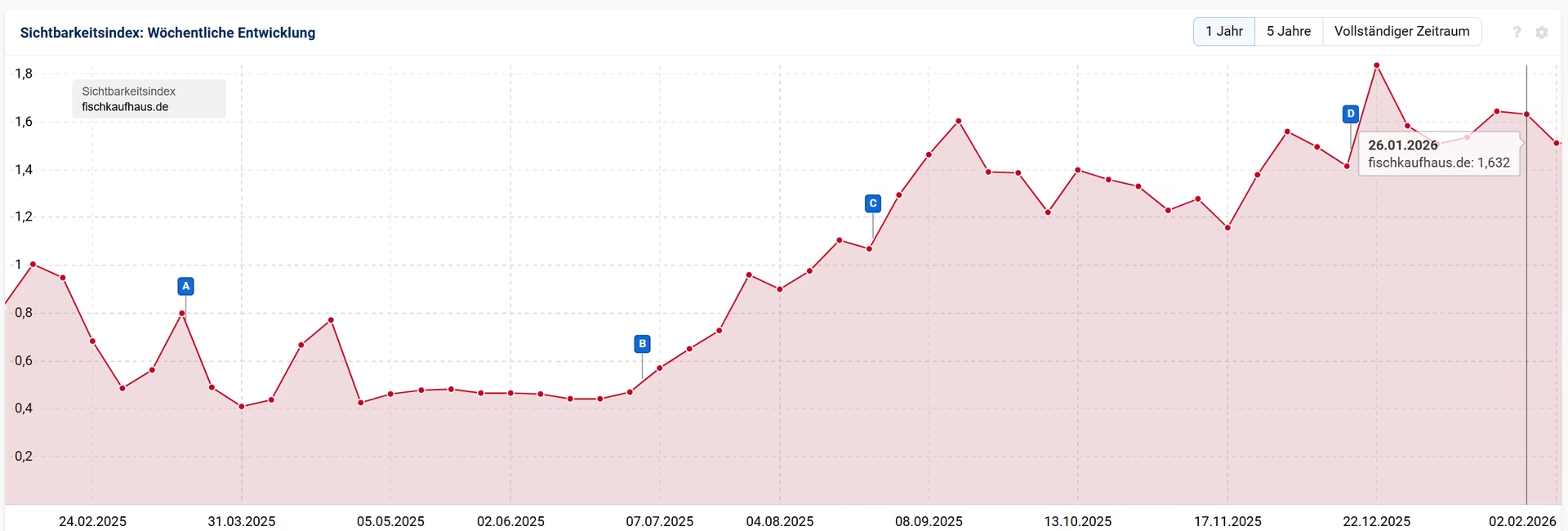
The visibility index over the year shows no random hype, but a real trend change: after a longer sideways phase around ~0.4–0.5 (spring/summer 2025), the curve picks up significantly from mid-2025 through to the 1.6+ range at the end of January 2026.
Why this matters: visibility is the sum of rankings and relevance across many search queries. A value of 1.6+ in this niche, against established major competitors, is a significant SEO signal.
Keyword development: almost 10,000 top-10 rankings
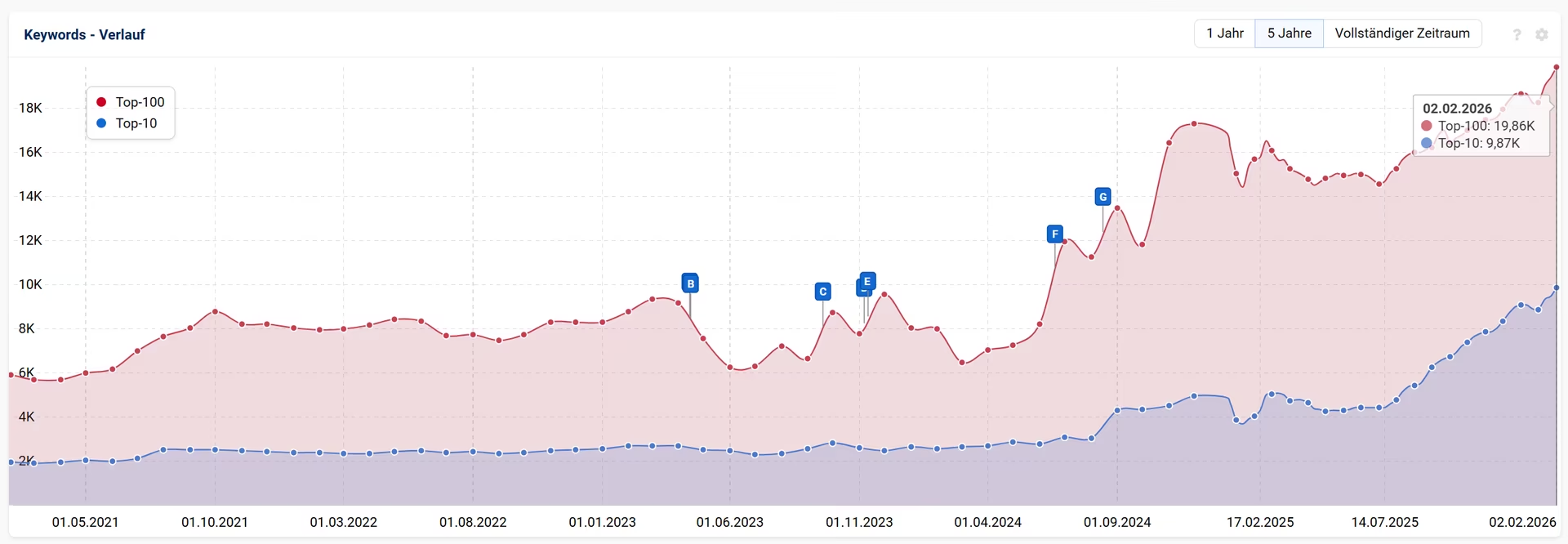
In the 5-year chart (Top-100 / Top-10) you can see the second hard signal: as of 02.02.2026, 19.86K keywords are in the Top-100, of which 9.87K are in the Top-10.
Context: Top-10 is the range where visibility is not just ‘there’, but click- and conversion-relevant. The fact that nearly half of the Top-100 set is already Top-10 is a genuine quality indicator.
Google AI Overviews: visible when Google generates answers
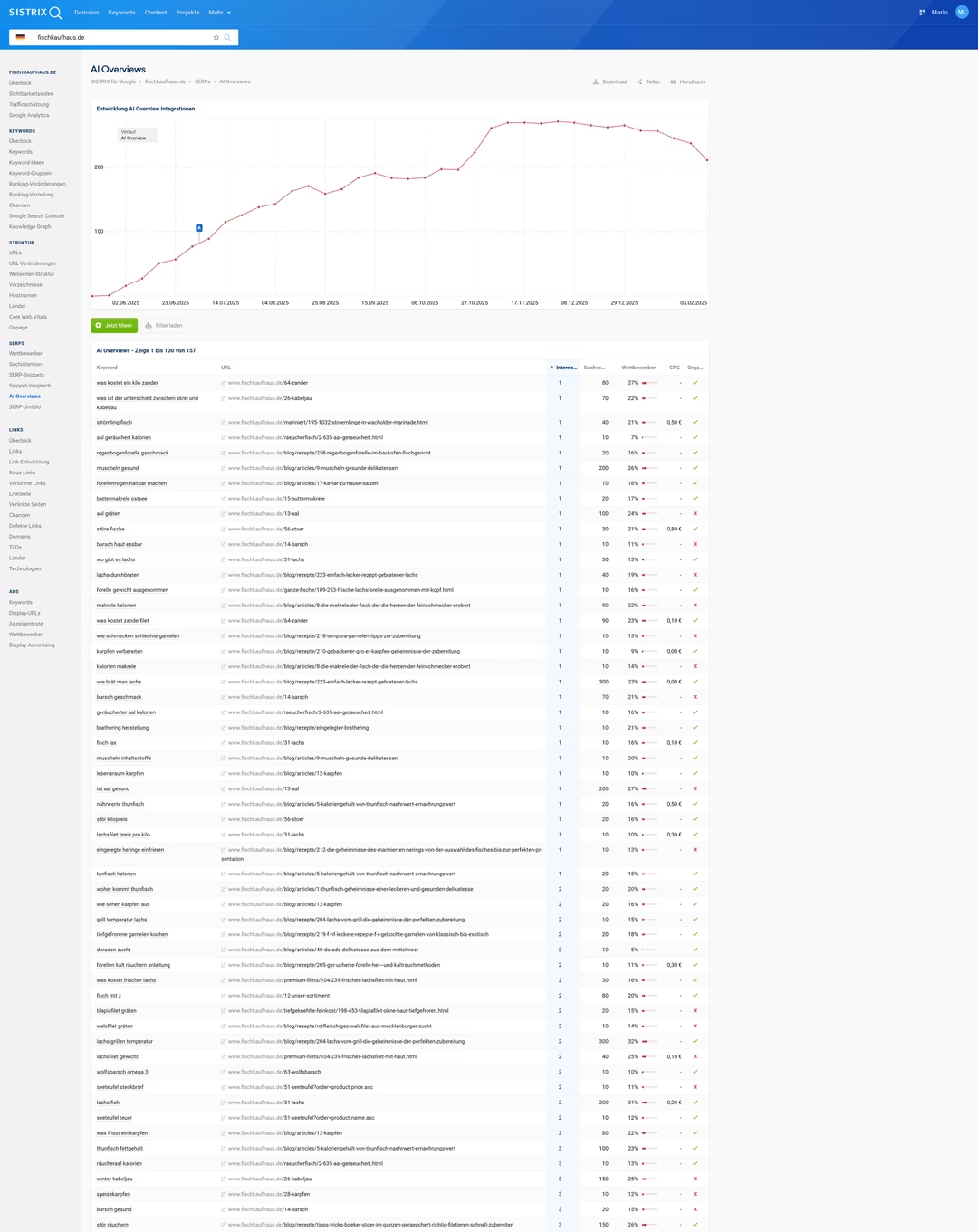
In SISTRIX, the development of AI Overview integrations for Fischkaufhaus.de becomes visible. The trend shows strong growth through Q4/2025 followed by a decline towards February 2026. Important: this drop should not automatically be evaluated negatively. Especially in the food/fish environment, demand is highly seasonal (Christmas/holidays = extreme peaks), which also changes the AI Overview delivery. The list shows 157 AI Overview keywords — a broad set of search queries where Fischkaufhaus URLs appear in AI Overview contexts. Based on the URLs, all four important content types are equally well represented:
- Categories (purchase intent!)
- Products (purchase intent!)
- Blog articles (informational)
- Fish recipes (informational)
GEO/LLM visibility: how Fischkaufhaus.de is cited, mentioned, and recommended
The most exciting signal comes from LLM tracking via Peec AI: here it’s not just ‘who gets mentioned’ that is analyzed, but also how often domains are cited as sources.
Fischkaufhaus performance vs. competitors
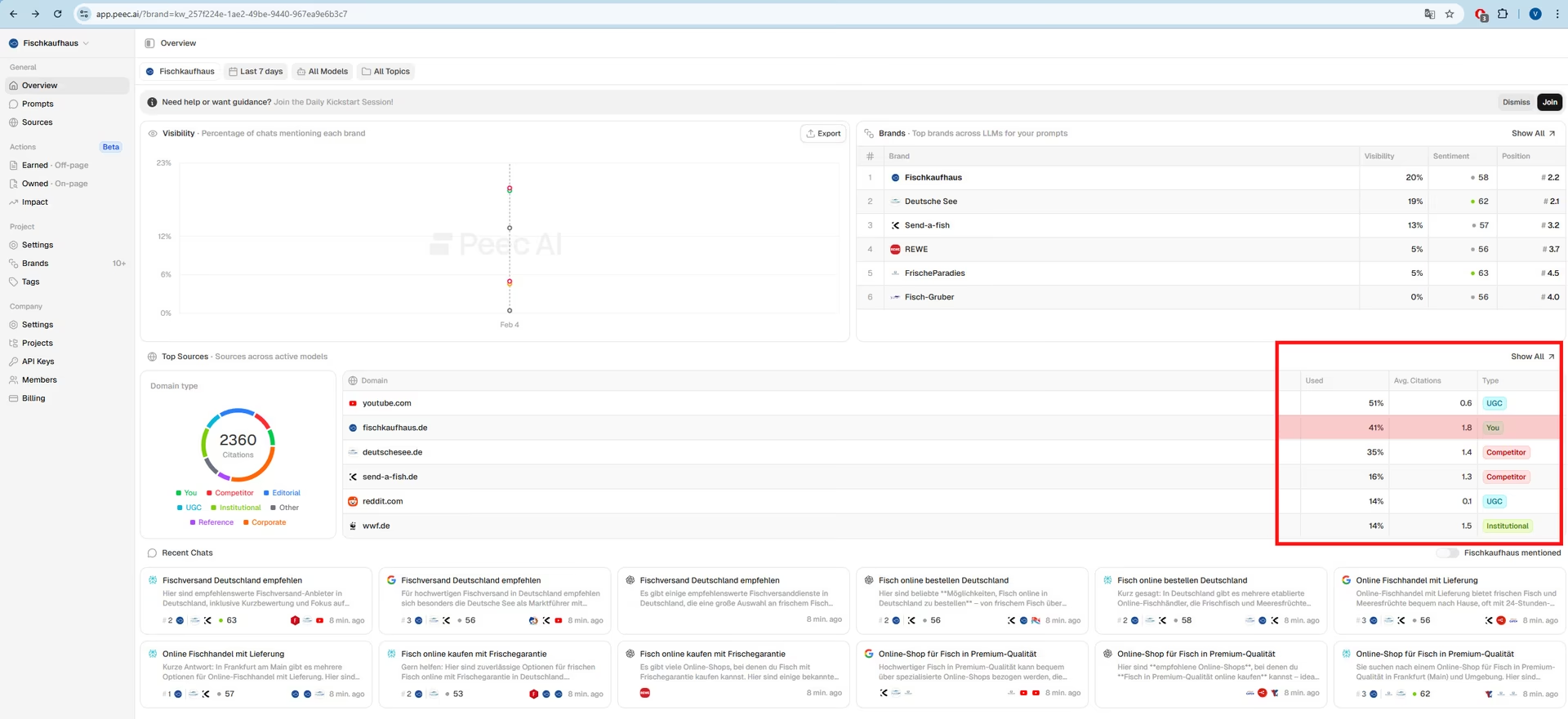
In the evaluated prompts, Fischkaufhaus ranks at:
- Visibility: 20%
- Avg. position: #2.2
— on a par with market leader Deutsche See (19%, #2.1). Behind them follow Send-a-Fish (13%, #3.2), REWE (5%, #3.7), and FrischeParadies (5%, #4.5).
Citations: the quality indicator in LLMs
In the source report, a total of 2,360 citations were recorded. These are not just brand mentions, but how often the client’s content was referenced. Of these:
- fischkaufhaus.de: Used 41%, avg. 1.8 citations (type ‘You’)
- deutschesee.de: Used 35%, avg. 1.4 (Competitor)
- send-a-fish.de: Used 16%, avg. 1.3 (Competitor)
Here, Fischkaufhaus.de is above average compared to the major competitors — both in visibility and in the average number of citations, i.e. the sources that are named/linked in the answer text.
Prompt reality: #1 rankings for purchase-intent queries
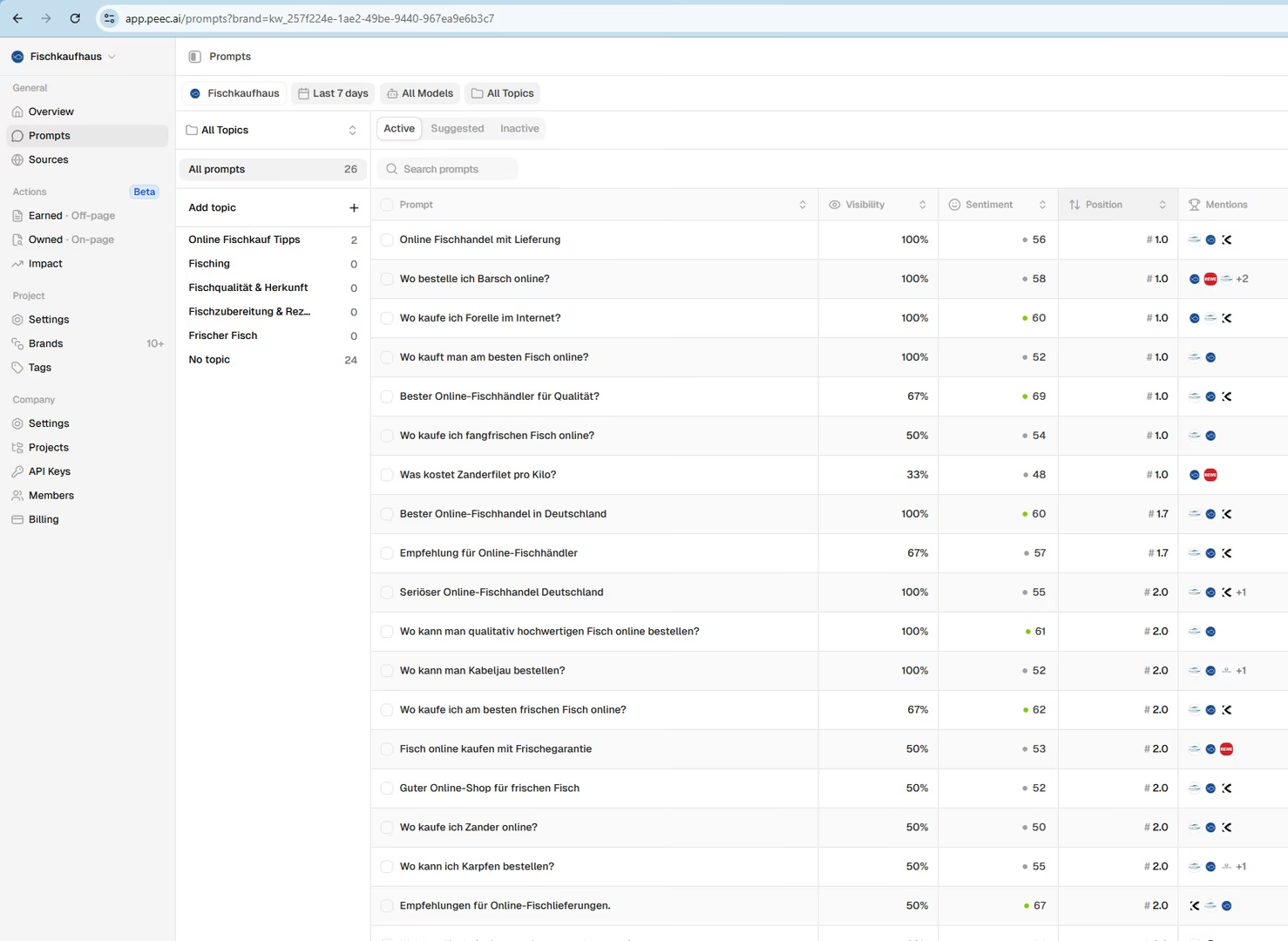
In the prompt list (26 prompts, ‘Last 7 days’), you can see what this looks like in practice: several purchase-intent queries are at 100% visibility and position #1.0, e.g.:
- “Online fish retailer with delivery” (100%, #1.0)
- “Where do I order perch online?” (100%, #1.0)
- “Where do I buy trout on the internet?” (100%, #1.0)
- “Where is the best place to buy fish online?” (100%, #1.0)
In addition, there are other prompts that are also strong (frequently #1.7 to #2.0), e.g.
- “Best online fish retailer in Germany”
- “Reputable online fish retailer Germany”
- “Where can I order high-quality fish online?”
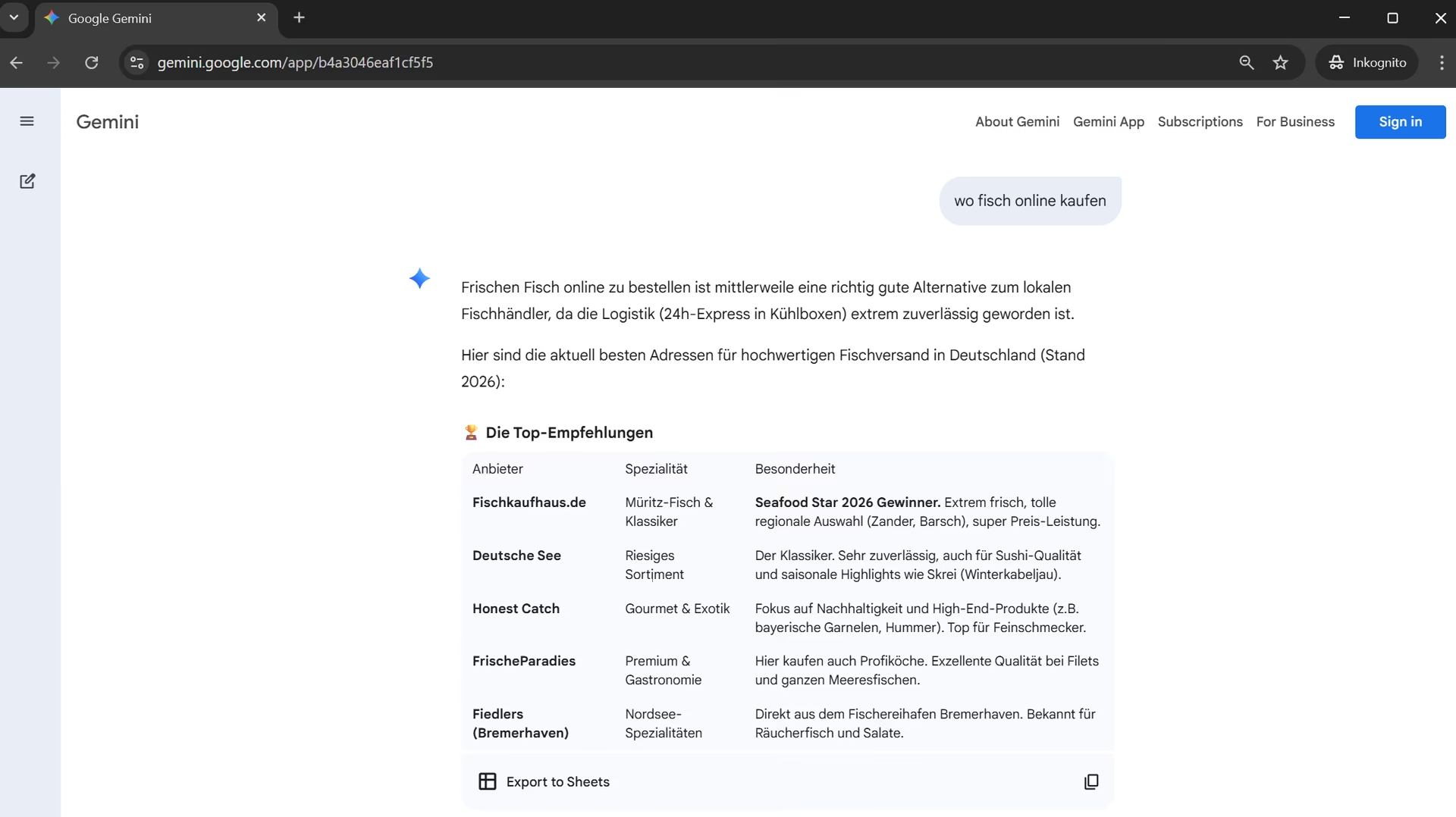
And this is what the queries look like live, using Gemini as an example from yesterday and today. Yesterday, the AI showed a list with our client at the top.
Today, the display looks different. Fischkaufhaus is listed under point 1, but below the competitor. Textually there are two nice click-boosters with phrases like ‘outstanding freshness’ and ‘sustainably sourced’.
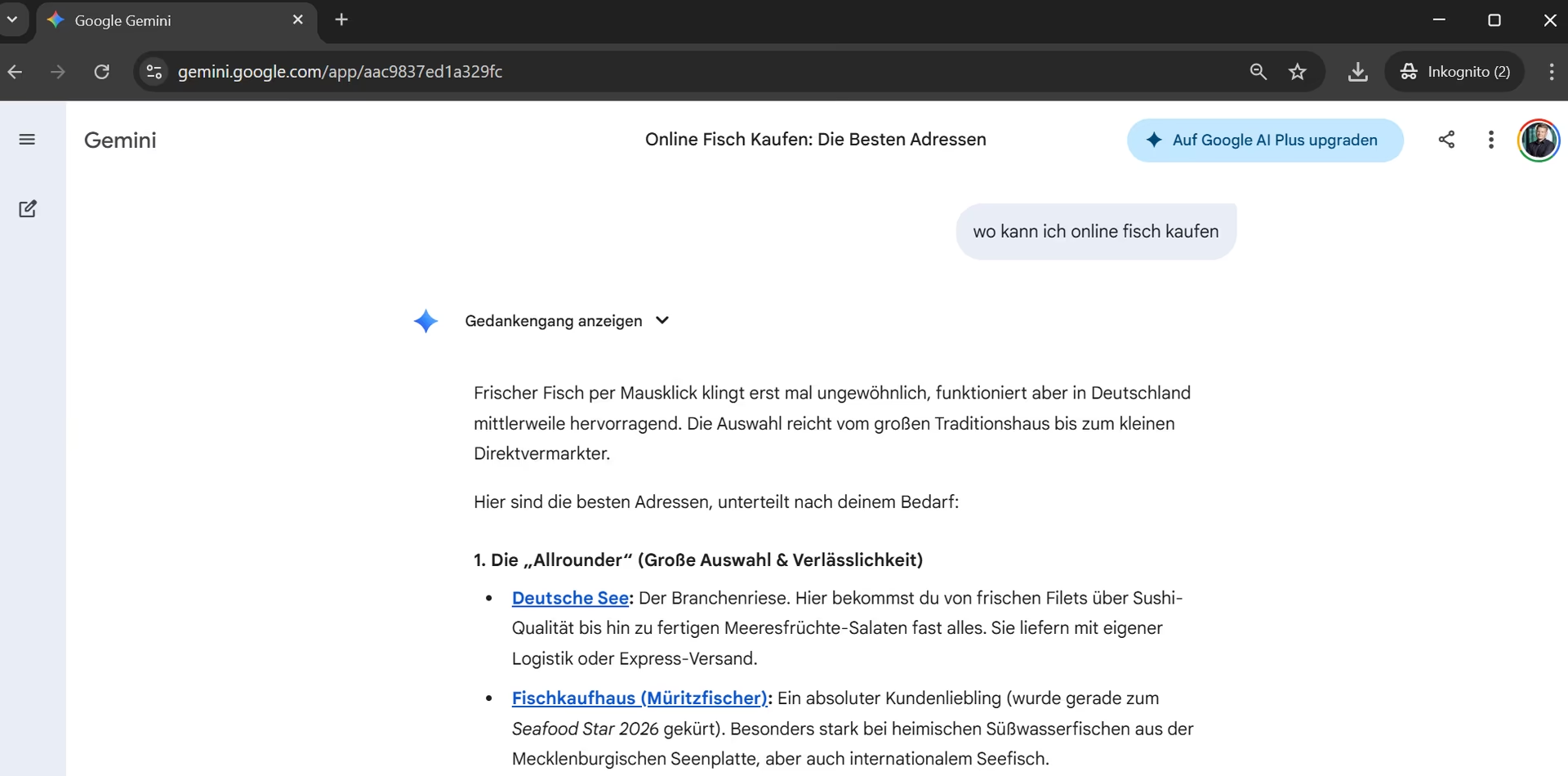
And if I enter this prompt again tomorrow, the result may be different again. What matters is simply that through our SEO measures and targeted LLM optimizations, we increase the probability that the client appears for the desired prompts.
Conclusion: SEO & GEO serve the same goal
Fischkaufhaus.de shows how classic SEO growth metrics (visibility, top-10 keywords) and new GEO metrics (AI Overviews, LLM positions, citations) reinforce each other. They make authority measurable with the goal of information and conversion.
If you want to know how visible your brand really is in ChatGPT, Google AI Overviews, Gemini, Claude, or Perplexity (including citations & competitor comparison): we analyze this data-based and show you where the biggest levers for GEO are. What works for our clients and what makes us ourselves visible in AI responses — we are happy to implement the same for your project. Get in touch with us today!